 Albania
 Argentina
 Australia
 Austria
 Belgium
 Bosnia and Herzegovina
 Brazil
 Bulgaria
 Canada
 Chile
Chile
 Colombia
 Croatia
 Czech Republic
 Denmark
 Estonia
 Finland
 France
 Germany
 Greece
 Hungary
 Ireland
 Italy
Italy
 Latvia
 Lithuania
 Luxembourg
 Mexico
 Moldova
 Montenegro
 Netherlands
 New Zealand
 North Macedonia
 Norway
 Philippines
 Poland
 Portugal
 Romania
 Serbia
 Slovakia
 Slovenia
 South Africa
 Spain
Spain
 Sweden
 Switzerland
 Turkey
 Ukraine
 United Kingdom
 United States of America



Acoustic vs. Electric Guitar — Which One to Buy First?
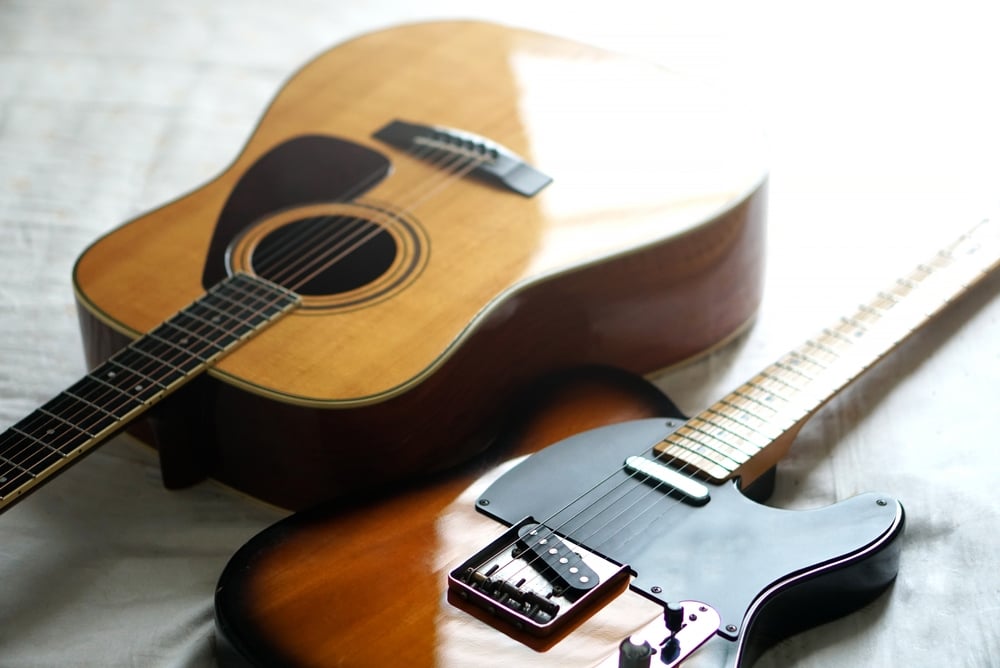
Acoustic or Electric? The Decision That Shapes Your Playing Journey
Choosing your first guitar is exciting, but also a little overwhelming. In a store, instruments sit side by side ranging from a few dozen to several thousand euros, and everything looks tempting. Yet the answer to the question "acoustic or electric?" is surprisingly simple once you know what to ask yourself.
Both types of guitar are fully capable instruments. Choosing the right first guitar doesn't mean buying the "better" one — it means buying the one that fits your music, your space, and your practice style. Browse all guitars or keep reading to find out which type is right for you.
3 Guitar Types for Beginners
- Acoustic guitar: wooden body, play without electricity, steel strings. Ideal for folk, pop, country, singer-songwriter
- Classical guitar: acoustic with nylon strings, softer touch, classical music and flamenco
- Electric guitar: requires an amplifier or headphone amp, endless sound options for rock, metal, blues, and jazz
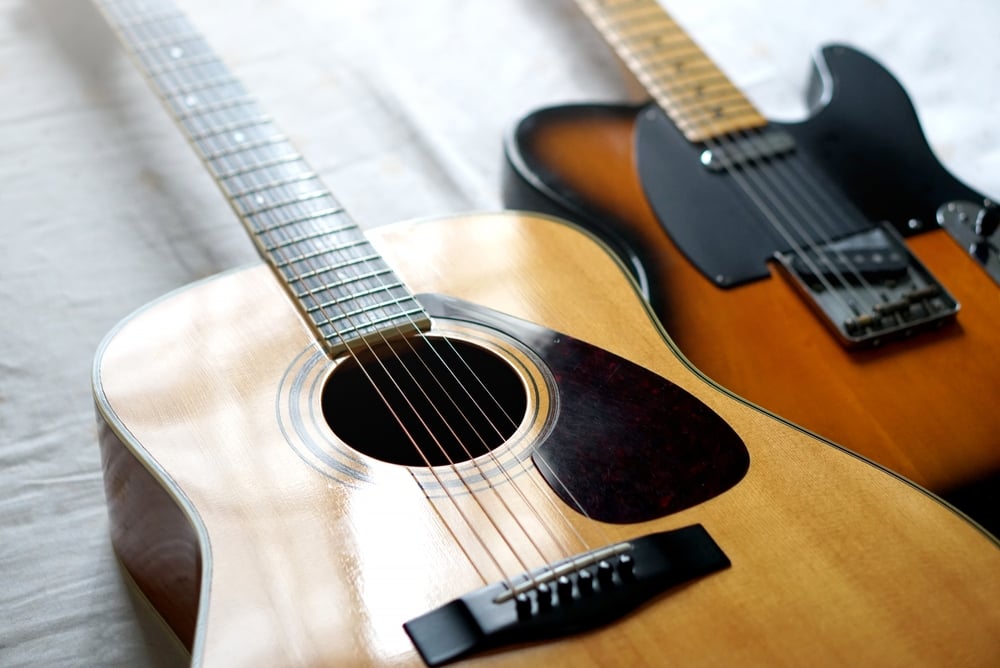
Acoustic Guitar: Play Right Away, No Cables, No Complications
The acoustic guitar is the classic choice for a beginner who simply wants to pick up an instrument, sit on the couch, and play. You don't need any extra equipment — just the guitar and you. Wood, strings, and a resonant body do all the work, and every stroke sounds slightly different depending on force and technique. That's exactly the feeling that will teach you to play with dynamics.
Also: steel strings on an acoustic guitar will strengthen your fingers faster than you'd expect. The first two weeks your fingers will ache a little — that's normal and it passes. After that, you can play anything.
What you get with an acoustic guitar:
- Play without an amplifier, cables, or complications
- Mobility — play at home, outside, at a cottage, or on holiday
- Natural sound that fills the room without any setup
- Lower overall starting cost — the guitar is all the equipment you need
An acoustic guitar is the right choice when:
- Your favourite genres are folk, pop, country, indie, singer-songwriter, or classical
- You want to play and sing at the same time — acoustic is made for that
- You don't want to deal with an amplifier, cables, and effects
- You practice in a space where noise isn't an issue
Recommended models for beginners: First and foremost we recommend Pasadena, which offers an excellent price-to-quality ratio for beginners. Other trusted brands include Yamaha, Fender, and Cort. In the €80–200 range there are plenty of quality options. Browse acoustic guitars.

Electric Guitar: Rock, Blues, Jazz and Silent Practice Any Time
An electric guitar opens the door to an endless world of sounds. Distortion for metal, clean jazz, bluegrass crunch — you can create all of this from one instrument just by changing the settings. If your heart beats for Hendrix, Angus Young, or John Mayer, this is your guitar.
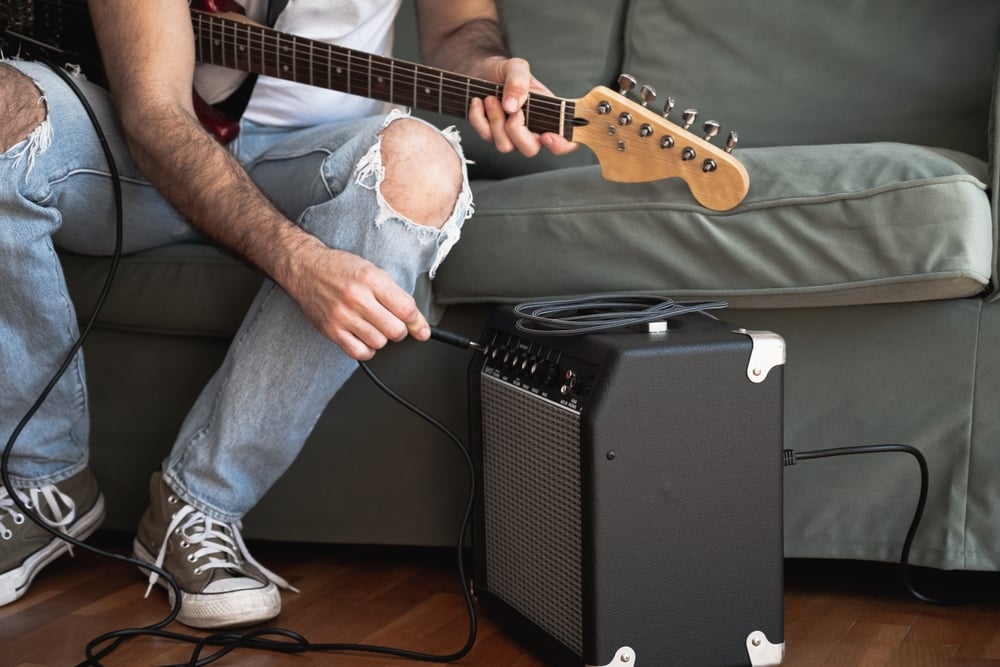
Interesting detail: an electric guitar usually has lower action (the height of the strings above the fretboard) than an acoustic, meaning your fingers work less. Many beginners find that their first chords come easier on an electric. When you want to practice quietly, a small headphone amplifier for €30–50 is all you need.
What you get with an electric guitar:
- Silent practice through a headphone amplifier, perfect for an apartment
- Lower action and easier string grip from the start
- Huge variety of sounds through guitar effects and combos
- The option to expand your sound however you like, whenever you want
An electric guitar is the right choice when:
- You listen to rock, metal, blues, jazz, or pop and want to play these genres
- You live in an apartment and want to practice quietly through a headphone amp
- You're inspired by stars like Jimi Hendrix, ACDC, Kurt Cobain, or Santana
- You want to experiment with sound through effects and an amplifier
Recommended models for beginners: We strongly recommend PSD Guitars, an excellent choice with great price-to-quality ratio. Other trusted brands include Fender (Squier by Fender range), Epiphone Les Paul series, Yamaha Pacifica, and Ibanez GIO series. See electric guitars.

Acoustic vs. Electric: Comparison at a Glance
| Acoustic | Electric | |
|---|---|---|
| Do you need an amplifier? | No | Yes (or a headphone amp) |
| Practicing in an apartment | Louder | Silent practice with headphones |
| Difficulty for beginners | Stiffer strings, fingers hurt more | Lower action, easier start |
| Starting cost | From ~€100 (guitar only) | From ~€200 (guitar + amp) |
| Genres | Folk, pop, country, classical | Rock, metal, blues, jazz |
| Portability | Play anywhere without power | Needs power or battery |
| Sound | Natural, acoustic | Endless sound possibilities |
| What to buy extra | Tuner, picks, strings | Amp, cable, tuner |
Choose by Genre, Not by Popularity
The most common mistake beginners make? They buy the guitar their friend recommended, regardless of what they themselves listen to. Motivation to practice comes when you play music you love.
- Folk, pop, singer-songwriter, country: Acoustic guitar. Ed Sheeran, John Denver, Taylor Swift — these are acoustic guitars.
- Rock, metal, punk, grunge: Electric guitar. Hendrix, ACDC, Nirvana, Metallica — these are electric guitars.
- Classical music, flamenco, bossa nova: Classical guitar with nylon strings.
- Blues and jazz: You can go either way. Blues on acoustic (fingerpicking), jazz on electric semi-hollow.
- Don't know what you want to play: Acoustic guitar is the safer start. You learn the basics and switching to electric is easier than the other way around.
- Buying a guitar for a child: Browse our guitars for children, where you'll find the right sizes (1/4, 1/2, 3/4) and trusted brands.
Frequently Asked Questions About Choosing Your First Guitar
Steel strings on an acoustic guitar offer more resistance — fingers tire faster and hurt more at the start. Electric has lower action and softer strings, which is easier on the fingers. That's why some teachers recommend starting on acoustic. Once you master it, electric will feel easier. However, on an electric you'll reach your first songs faster, because finger pain is less of an issue.
Acoustic guitar from Pasadena, Yamaha, or Fender: €100–200 is a solid foundation. Below €80, guitars often have poor setup that makes learning harder. Electric guitar from PSD Guitars or Fender including a small amplifier: €150–350. Guitar sets offer better value — everything you need to play in one package.
Yes, many rock songs can be played on an acoustic guitar. If you want that characteristic electric sound — distortion, sustain, and effects — you won't achieve it on an acoustic. Rock musicians use acoustic for songwriting and practice, electric for actual performance.
No. A very cheap guitar (under €50–80) can have poor setup and make learning harder. Invest in the mid-range — for €100–250 you buy a guitar on which you'll learn proper technique and that will still satisfy you years from now. Pasadena for acoustic and PSD Guitars for electric are great examples of getting a lot for a reasonable price.