 Albania
 Argentina
 Australia
 Austria
 Belgium
 Bosnia and Herzegovina
 Brazil
 Bulgaria
 Canada
 Chile
Chile
 Colombia
 Croatia
 Czech Republic
 Denmark
 Estonia
 Finland
 France
 Germany
 Greece
 Hungary
 Ireland
 Italy
Italy
 Latvia
 Lithuania
 Luxembourg
 Mexico
 Moldova
 Montenegro
 Netherlands
 New Zealand
 North Macedonia
 Norway
 Philippines
 Poland
 Portugal
 Romania
 Serbia
 Slovakia
 Slovenia
 South Africa
 Spain
Spain
 Sweden
 Switzerland
 Turkey
 Ukraine
 United Kingdom
 United States of America



How to choose a cajon
A cajon is a box you sit on and play at the same time. We go through how it works, what it is made of, what size you need and which brands and models are worth a look.
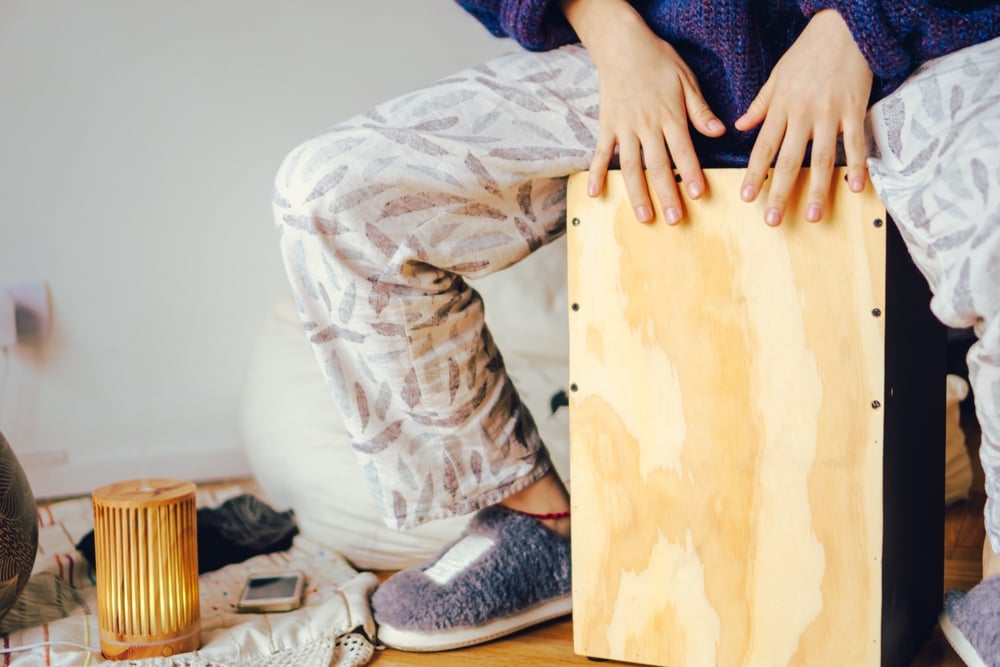
A cajon is a box you sit on and play at the same time, and it is the most practical drum you can buy. It came out of Peru, where slaves drummed on shipping crates, Paco de Lucía brought it into flamenco in the seventies, and since then it has turned up everywhere from campfires through acoustic gigs to recording studios.
The reason is simple. It takes up less room than a chair, needs no stands and no tuning, and you play it with your hands, so one piece of wood gives you both a bass and a snare. We will go through how it actually works, what it is made of, what size you need and what to buy alongside it.
The reason is simple. It takes up less room than a chair, needs no stands and no tuning, and you play it with your hands, so one piece of wood gives you both a bass and a snare. We will go through how it actually works, what it is made of, what size you need and what to buy alongside it.
How one box gives you two sounds
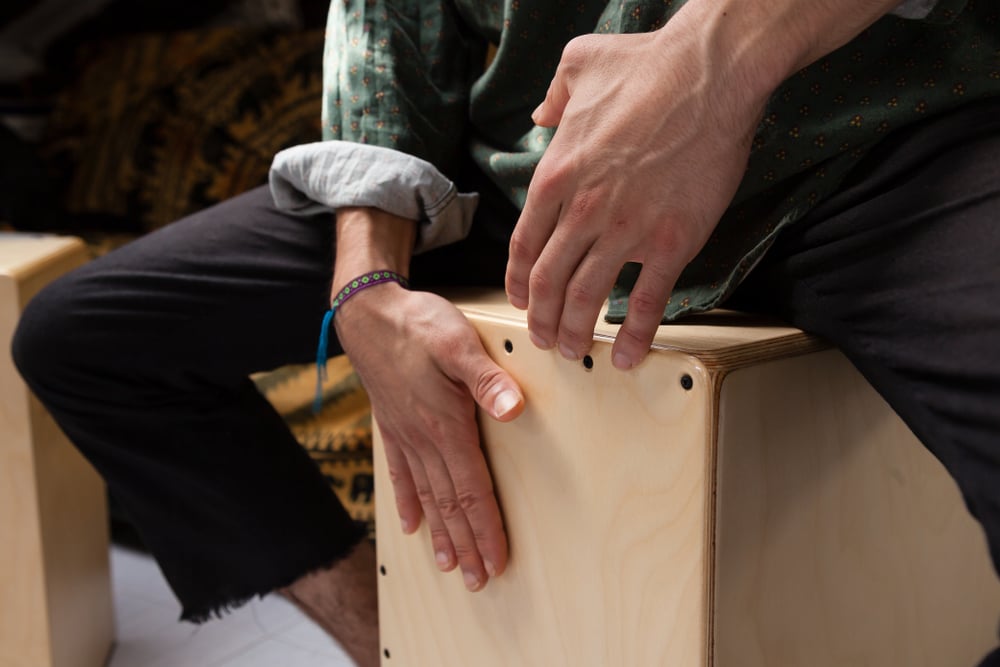
The front plate is called the tapa and it is thinner than the rest of the body, because it is the part that vibrates. Hit it in the middle and you get a deep bass tone that stands in for the kick, hit the top corner and you get a sharp crack that stands in for the snare.
That crack comes from the snare system hidden inside. It is either guitar strings or metal springs stretched just under the top edge of the tapa, which they rattle against on every hit. There is a port at the back for the sound to escape, which is exactly why you should never stand a cajon with its back against a wall.
You play the whole rhythm from two spots on one plate, and that is why a cajon is quicker to learn than a drum kit.
That crack comes from the snare system hidden inside. It is either guitar strings or metal springs stretched just under the top edge of the tapa, which they rattle against on every hit. There is a port at the back for the sound to escape, which is exactly why you should never stand a cajon with its back against a wall.
You play the whole rhythm from two spots on one plate, and that is why a cajon is quicker to learn than a drum kit.
Why people buy one instead of a drum kit
A cajon solves three things that hurt with a drum kit. It is considerably quieter, so you can practise in a flat without the neighbours banging on the ceiling. It has no setup, because you put it on the floor and sit down. And you carry it in one hand, which is never going to be true of acoustic drums.
You pay for that in dynamics and range. A cajon has two or three usable sounds where a kit has twenty, and a loud band will simply drown it out. If this is the choice you are weighing up, electronic vs. acoustic drums compares them, and if you are after cymbals for a kit, that is covered in how to choose cymbals.
The people who buy one most often are those backing an acoustic guitar, playing bars and small clubs, or wanting to start with rhythm without giving up a whole corner of a room at home.
You pay for that in dynamics and range. A cajon has two or three usable sounds where a kit has twenty, and a loud band will simply drown it out. If this is the choice you are weighing up, electronic vs. acoustic drums compares them, and if you are after cymbals for a kit, that is covered in how to choose cymbals.
The people who buy one most often are those backing an acoustic guitar, playing bars and small clubs, or wanting to start with rhythm without giving up a whole corner of a room at home.
Materials and how they shape the sound
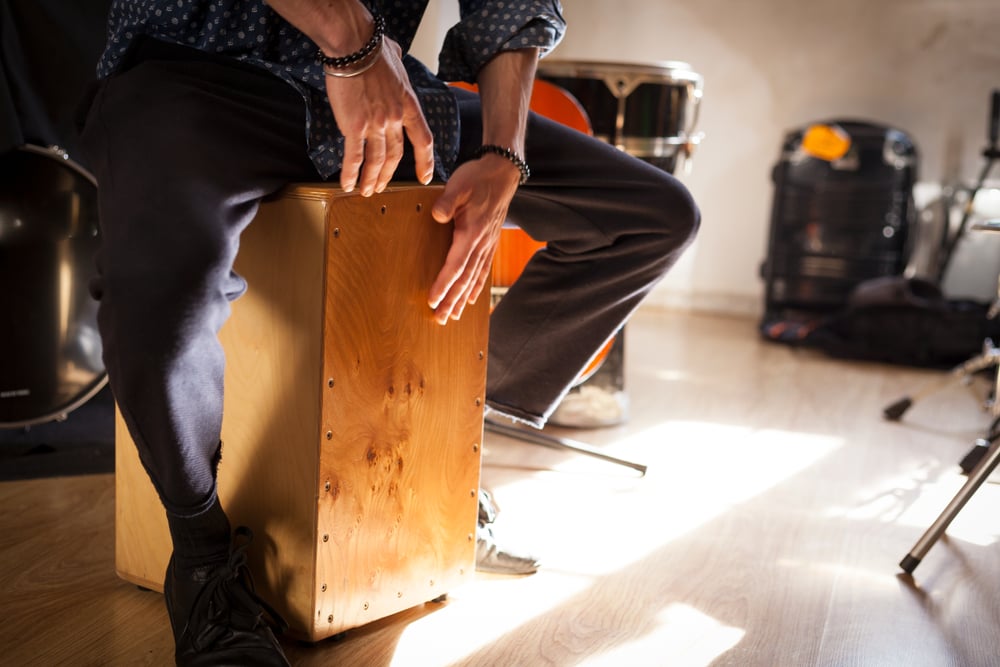
Wood is to a cajon what the top is to a guitar, the thing that decides the sound. Wooden cajons make up the overwhelming majority of the range and it is the only category where you genuinely have a choice.
The body is usually birch or beech plywood, which is hard and gives the sound definition, while the tapa is a thinner layer and it is what determines how sharp the slap will be. Pricier models have a tapa faced with a fine wood veneer, which is mostly about looks, though you feel it in the response under your fingers too.
Fibreglass cajons and cardboard cajons are in the range as well, but we are talking single figures. A cardboard one makes sense as a practice piece for a child or for travelling, a fibreglass one copes with damp and playing outdoors. Without a specific reason it is worth sticking with wood.
The body is usually birch or beech plywood, which is hard and gives the sound definition, while the tapa is a thinner layer and it is what determines how sharp the slap will be. Pricier models have a tapa faced with a fine wood veneer, which is mostly about looks, though you feel it in the response under your fingers too.
Fibreglass cajons and cardboard cajons are in the range as well, but we are talking single figures. A cardboard one makes sense as a practice piece for a child or for travelling, a fibreglass one copes with damp and playing outdoors. Without a specific reason it is worth sticking with wood.
The snare system: strings or springs
The crack is produced in two ways and each sounds different. A string system uses tensioned guitar strings and gives a softer, shorter sound that suits acoustic music and flamenco. A spring system is louder and more aggressive and comes closer to a real snare drum, so it fits pop and heavier rhythm work.
More important than the type is whether it can be adjusted. Better models have screws in the top corners that pull the strings closer to the tapa or draw them away from it, changing how much crack goes into the sound. Some models can switch them off entirely and the cajon then sounds like a plain drum, which you will use on slow songs or when the snare gets in the way of a mix.
If you are choosing your first one, look for an adjustable system, because the sound that suits you today may not suit you in a year.
More important than the type is whether it can be adjusted. Better models have screws in the top corners that pull the strings closer to the tapa or draw them away from it, changing how much crack goes into the sound. Some models can switch them off entirely and the cajon then sounds like a plain drum, which you will use on slow songs or when the snare gets in the way of a mix.
If you are choosing your first one, look for an adjustable system, because the sound that suits you today may not suit you in a year.
Size and seat height
A standard cajon is around 47 to 50 cm tall with a footprint of roughly 30 × 30 cm, which is the height of an ordinary chair and suits most adults. What decides it is the same as with a chair: your feet must rest flat on the floor and your knees should sit at roughly a right angle, otherwise your back will ache after half an hour of playing.
If you are taller than about 185 cm, look at the taller models or reckon on putting a riser under the cajon, and if you are shorter, a smaller model will give you better contact with the tapa. Smaller so-called mini cajons are in the range too, but treat them as an instrument for children or as an extra percussion piece, not as a full replacement.
If you are taller than about 185 cm, look at the taller models or reckon on putting a riser under the cajon, and if you are shorter, a smaller model will give you better contact with the tapa. Smaller so-called mini cajons are in the range too, but treat them as an instrument for children or as an extra percussion piece, not as a full replacement.
Which brand and which model to pick
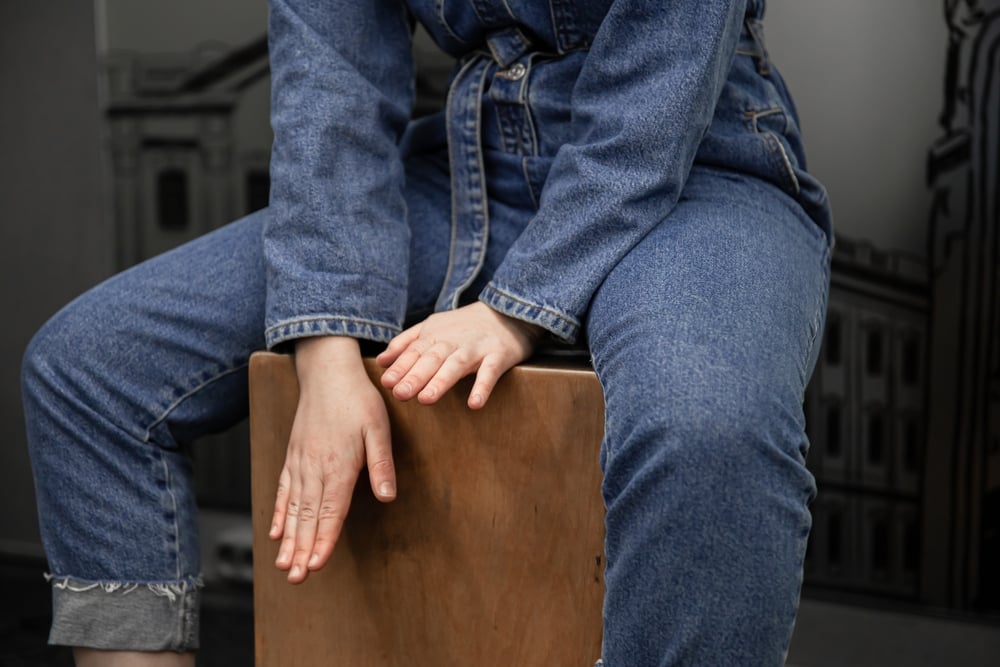
Two brands have the cajon world divided between them. Meinl is a German company covering the entire span from children's instruments to hand-built flamenco models, and Sela is also German but narrower in focus, built around a refined snare system and around build-it-yourself kits. The remaining brands are more of a supplement in the range.
If you are buying a first cajon and want a safe bet, go for the Meinl Headliner Snare Cajon line. We stock it in several colour finishes, for example Charcoal Black Fade or Sonoran Amber Fade, and it has adjustable strings and solid plywood. Simpler and cheaper options from the same brand are the HCAJ1 Natural and HCAJ3 Natural, which offer fewer adjustment options but sound honest.
If the German school with its emphasis on the snare appeals more, look at the Sela CaSela. Its strings can be fine-tuned very precisely and the CaSela Pro version adds a more refined interior. Sela also make kits you assemble yourself, which make an interesting gift and teach you how the instrument works along the way.
For children the safest choice is the Nino 950, a smaller model from Meinl's sister brand, which builds instruments specifically for schools and for the youngest players. The full range is in Nino cajons.
If you want something other than a classic box, Meinl has the Slap Top Cajon, which you rest on your lap and play from above, and the Cajon Drumset, a rig played with both feet and hands. Mahalo meanwhile makes smaller colourful lap cajons that travel well. And when it comes down to sound and materials, the premium tier is the Meinl Artisan Edition line with flamenco models in fine hardwoods.
If you are buying a first cajon and want a safe bet, go for the Meinl Headliner Snare Cajon line. We stock it in several colour finishes, for example Charcoal Black Fade or Sonoran Amber Fade, and it has adjustable strings and solid plywood. Simpler and cheaper options from the same brand are the HCAJ1 Natural and HCAJ3 Natural, which offer fewer adjustment options but sound honest.
If the German school with its emphasis on the snare appeals more, look at the Sela CaSela. Its strings can be fine-tuned very precisely and the CaSela Pro version adds a more refined interior. Sela also make kits you assemble yourself, which make an interesting gift and teach you how the instrument works along the way.
For children the safest choice is the Nino 950, a smaller model from Meinl's sister brand, which builds instruments specifically for schools and for the youngest players. The full range is in Nino cajons.
If you want something other than a classic box, Meinl has the Slap Top Cajon, which you rest on your lap and play from above, and the Cajon Drumset, a rig played with both feet and hands. Mahalo meanwhile makes smaller colourful lap cajons that travel well. And when it comes down to sound and materials, the premium tier is the Meinl Artisan Edition line with flamenco models in fine hardwoods.
Special types worth knowing about
Bongo cajons have a body split into two chambers tuned differently, so one instrument gives you two distinct tones and they are played more with the fingers than the whole palm. As an addition to a setup they are enjoyable, as an outright first cajon they suit less well.
In special cajons you will find bass models with a bigger body and a deeper bottom end, cajons with a built-in pickup for plugging into a PA, and various hybrids. This category is surprisingly rich and it is worth going through once you know what you want from the instrument.
A chapter of its own is the cajon foot pedal, which plays the bass with your foot and leaves your hands free for other percussion. You will find it in cajon accessories.
In special cajons you will find bass models with a bigger body and a deeper bottom end, cajons with a built-in pickup for plugging into a PA, and various hybrids. This category is surprisingly rich and it is worth going through once you know what you want from the instrument.
A chapter of its own is the cajon foot pedal, which plays the bass with your foot and leaves your hands free for other percussion. You will find it in cajon accessories.
A cajon for children
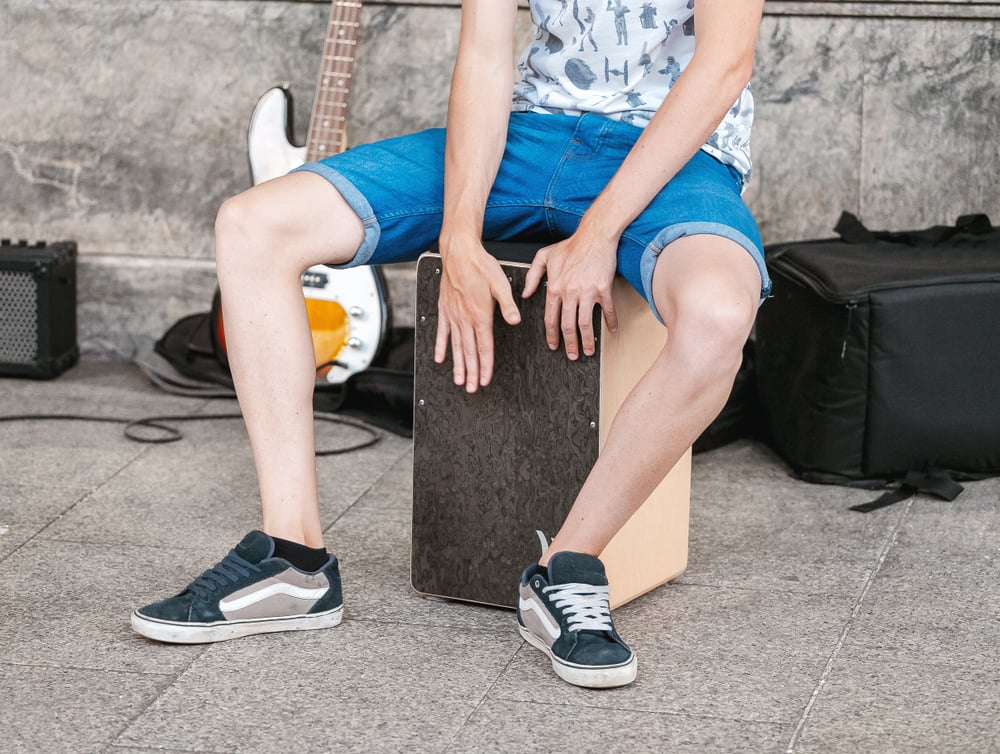
A cajon is one of the few instruments a child can handle straight away, because it needs neither tuning nor a stick technique. For smaller children there are children's percussion and percussion sets and smaller models with a lower seat.
Height decides it just as it does with adults. The child has to reach the floor with their feet, otherwise they will slump forward and only play the top corners. If you are still weighing up whether this is the right instrument, musical instruments for children and how to choose drums for children will help.
Height decides it just as it does with adults. The child has to reach the floor with their feet, otherwise they will slump forward and only play the top corners. If you are still weighing up whether this is the right instrument, musical instruments for children and how to choose drums for children will help.
What to buy alongside it
The list is mercifully short and cheap. A seat pad and a bag are practically compulsory, because the instrument gets carried and plywood scuffs easily, and brushes or dedicated cajon sticks are worth having for a softer sound than a bare palm gives. Cajon accessories also include pickups for amplification.
Once it grabs you, more percussion naturally follows. Usually shakers and tambourines you strap to your leg, or congas, bongos or a djembe if hand drumming appeals. For mounting there is percussion hardware, and a percussion table is a practical thing so the small items are not all over the floor.
Once it grabs you, more percussion naturally follows. Usually shakers and tambourines you strap to your leg, or congas, bongos or a djembe if hand drumming appeals. For mounting there is percussion hardware, and a percussion table is a practical thing so the small items are not all over the floor.
The short version
For most people the right answer is a wooden cajon of standard size with an adjustable snare system, plus a seat pad and a bag. Instruments like that make up the bulk of the range, so there is plenty to choose from and nothing has to be ordered in.
Only worry about material when you have a specific reason, decide the height by who is going to sit on it, and leave the special types until later, when you know what the first one is missing. The whole category is in cajons, and a wider choice of hand drums in percussion.
Only worry about material when you have a specific reason, decide the height by who is going to sit on it, and leave the special types until later, when you know what the first one is missing. The whole category is in cajons, and a wider choice of hand drums in percussion.
Frequently asked questions
Is a cajon suitable for a complete beginner?
Yes, and it is one of the best possible starts, because you do not need to tune, set anything up or hold sticks. You will play a usable rhythm within minutes, which is not the case with a drum kit.
What size cajon should I buy?
A standard height of around 47 to 50 cm suits most adults. The same thing decides it as with a chair, feet flat on the floor and knees at a right angle. For children take a lower model.
What is the difference between a string and a spring snare system?
Strings give a softer, shorter crack that suits acoustic music and flamenco, springs are louder and come closer to a real snare drum. More important than the type is whether the system can be adjusted.
Is a cajon really quieter than a drum kit?
Considerably, but it is not quiet. It is far more acceptable in a flat than acoustic drums, though the neighbours will hear the bass hits through the wall. A seat pad and a rug under the instrument help.
Can a cajon be amplified?
It can and it is done routinely. Either buy a model with a built-in pickup from special cajons, or add an external pickup from cajon accessories. For a small stage a microphone in front of the rear port is often enough.
Is a cardboard or fibreglass cajon worth it?
Only if you have a specific reason, such as playing outdoors or a practice instrument for a child. There are single figures of them in the range, while there are over a hundred wooden cajons to choose from, so the choice in wood is incomparably wider.