Albania
 Argentina
 Australia
 Austria
 Belgium
 Bosnia and Herzegovina
 Brazil
 Bulgaria
 Canada
 Chile
 Colombia
 Croatia
 Czech Republic
 Denmark
 Estonia
 Finland
 France
 Germany
 Greece
 Hungary
 Ireland
 Italy
 Latvia
 Lithuania
 Luxembourg
 Mexico
 Moldova
 Montenegro
 Netherlands
 New Zealand
 North Macedonia
 Norway
 Philippines
 Poland
 Portugal
 Romania
 Serbia
 Slovakia
 Slovenia
 South Africa
 Spain
 Sweden
 Switzerland
 Turkey
 Ukraine
 United Kingdom
 United States of America


Art Paints
Here you'll find art paints for pictures on canvas and paper, for decorating glass, porcelain, fabric and wood, and for children who paint with their fingers. Acrylic paints make up the largest share, followed by watercolours and oils, alongside fabric, glass and silk paints, tempera and gouache paints, and drawing inks. The art paints in tubes, bottles and sets come from brands such as Kreul, Golden Artist Colors, Daler Rowney, Lukas, Pébéo and Maimeri. For a picture, start by choosing your painting technique; for decorating objects, start with the material you want to paint on.
Which art paints do you thin with water, and which with oil?
Most paints for pictures can be thinned with water, and you can wash the brushes under running water afterwards. The exception is oil paint, which uses oil as its binder; you thin it with turpentine, an odourless turpentine substitute or additional oil. Paints also differ in how quickly they dry and whether they cover the surface beneath them once dry.
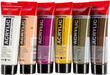
- Acrylic paints can be thinned with water and become water-resistant when dry, adhering to canvas, paper, wood and cardboard.
- Oil paints dry slowly, taking anything from several days to weeks, so you can still blend colour transitions on the canvas the following day.
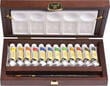
- Watercolour paints are transparent; you create light areas in the picture by leaving the white paper unpainted.
- Gouache paints are opaque and dry to a matt finish; water will dissolve them again after they have dried.
- Tempera paints are opaque paints thinned with water and are often used in art lessons.
You'll also find drawing inks for pen work, calligraphy and brush washes. To paint a wash, you dilute the ink with water, allowing you to get both a rich black and pale grey tones from a single bottle.
Which paint should you use on a T-shirt, glass or porcelain?
When decorating objects, the material matters rather than the technique. Once fixed, usually by ironing, fabric paint can withstand washing according to the manufacturer's instructions. Silk paints are more fluid and soak into the fibres, so a scarf stays soft. A design on silk is usually outlined with a contour medium to stop the colours from bleeding.
Glass and porcelain paints are often cured in a household oven after drying, at the temperature the manufacturer specifies on the packaging. Window Color by Kreul works differently: you paint the picture on a sheet of film, then peel it off once dry and stick it to a window. For other surfaces, there are separate categories for wood paints, leather and faux leather paints and blackboard paints, which turn a board or wall into a surface you can write on with chalk.
Which paints should you give children, and what can you use on the face?
The youngest children start with finger paints, which are thick, applied by hand and wash off the skin with water. Only use face paints explicitly intended for the purpose on the face and body. Don't put paints for paper, fabric or glass on the skin, even if they can be thinned with water.
How do you prepare a surface and change a paint's properties?
Primers prepare wood, cardboard or a canvas you've stretched yourself for painting: they even out the surface so that the paint doesn't soak in unevenly. Ready-made artists' canvases from a shop are usually already primed at the factory.
Painting mediums change a paint's properties: they thin it, add gloss or a matt finish, slow drying or thicken the layer. In acrylic pouring, you mix the paint with a fluid medium, such as Pouring-Fluid by Kreul, so that it flows freely across the canvas. You'll find the full selection in the Mediums category. Marbling paints float on the surface of water, and you transfer their pattern by dipping paper or an object into it; neon paints have intensely bright shades.
Acrylic Paints
Watercolour Paints
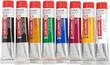
Oil Paints
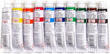
Tempera Paints
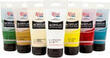
Gouache Paints
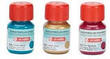
Glass Paints
Porcelain Paints
Ceramic Paint
Textile Paints
Silk Paints
Inks
Finger Paints
Face Paints
Primers
Leather/Faux leather paints
Paints for Restoration
Universal Paint
Marbling Paint
Blackboard Paint
Wood Paint
Neon paints
Mediums
Popular Brands