 Albania
 Argentina
 Australia
 Austria
 Belgium
 Bosnia and Herzegovina
 Brazil
 Bulgaria
 Canada
 Chile
Chile
 Colombia
 Croatia
 Czech Republic
 Denmark
 Estonia
 Finland
 France
 Germany
 Greece
 Hungary
 Ireland
 Italy
Italy
 Latvia
 Lithuania
 Luxembourg
 Mexico
 Moldova
 Montenegro
 Netherlands
 New Zealand
 North Macedonia
 Norway
 Philippines
 Poland
 Portugal
 Romania
 Serbia
 Slovakia
 Slovenia
 South Africa
 Spain
Spain
 Sweden
 Switzerland
 Turkey
 Ukraine
 United Kingdom
 United States of America



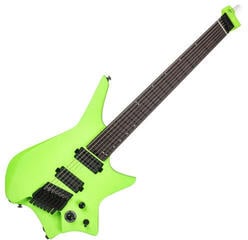
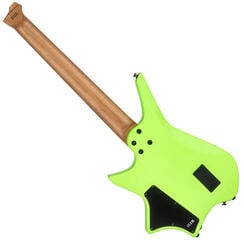
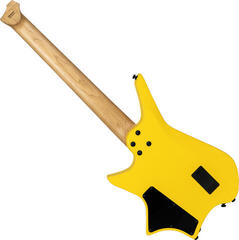
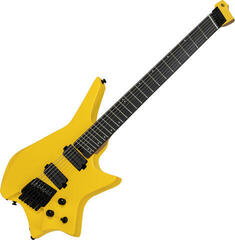
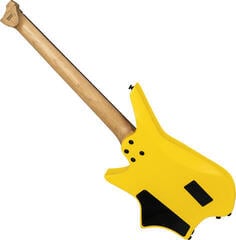
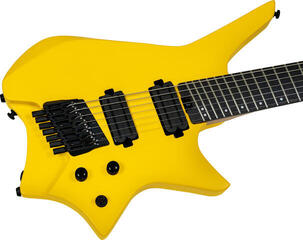
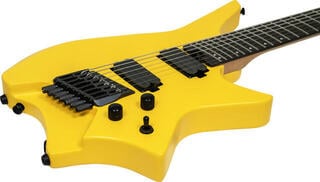
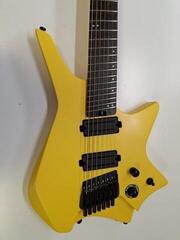
Headless Guitars
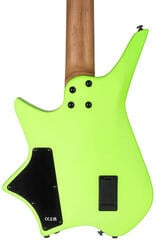
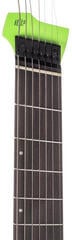
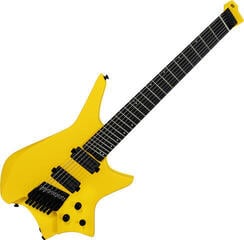
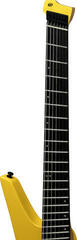
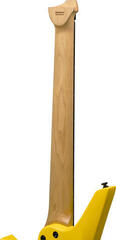
A headless guitar has no traditional headstock, and its tuning mechanism is usually integrated into the bridge. Its shorter overall length makes it easier to carry and less bulky while playing, although the design alone does not guarantee low weight or perfect balance. When choosing one, check the strap-button positions, body shape, scale length and string-retention system. Compatibility with a case, stand and replacement parts for the specific hardware also matters.
What a headless design changes
Removing the headstock moves tuning to the bridge and reduces the instrument's overall length without shortening the scale. This is useful for travel, playing in tight spaces or recording at home. Less weight at the end of the neck may reduce neck dive, but the final balance still depends on the entire body, metal hardware and strap position.
Tuners at the bridge are less exposed to accidental knocks against a stand or wall. A missing headstock does not make tuning stable by itself. Stability depends on the precision of the hardware, string retention, the nut or clamp, correct string installation and the instrument's setup.
Check strings, scale length and string count
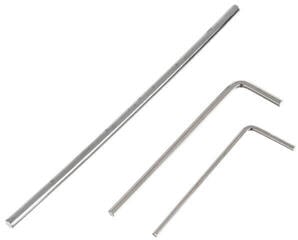
Some headless systems use standard strings held by a clamp, while others require double-ball strings with a ball at each end. Before buying, find out which system the instrument uses and whether a string change requires a specific string type or tool. The procedure differs between designs, so the manufacturer's instructions take priority over general advice.
Choose string count and scale length for your repertoire rather than the guitar's shape. A six-string model covers common tunings, while seven- and eight-string versions extend the lower register. A baritone scale supports lower tuning; a multiscale design combines a longer bass side with a shorter treble side. Both require a different fretting-hand reach from a shorter scale.
Headless or conventional guitar?
| Area | Headless guitar | Conventional guitar |
|---|---|---|
| Dimensions | Shorter overall length at the same scale | The headstock adds to the instrument's length |
| Balance | Less weight at the end of the neck; the result depends on body and strap | Headstock and body shape plus strap-button positions affect balance |
| Tuning | The tuning mechanism is usually at the bridge | Tuning machines are generally on the headstock |
| String changes | The procedure depends on clamps and string type | Most players and repair shops know standard tuning machines |
| Servicing and parts | Replacement may require a part made for the specific system | The design more often uses common tuning-machine types |
| Transport | More compact format that needs a suitable case | Wider choice of standard guitar cases and stands |
Case, strap and accessories
A shorter instrument may move around inside a conventional guitar case. Compare the internal dimensions, neck support and padding position; for air travel, follow the carrier's conditions and the measurements of the specific case. Check the stand or wall hanger too, because a guitar without a headstock may not fit a hanger designed to support a conventional neck.
When playing standing up, strap-button positions and the shape of the rear body edge affect comfort. If you often play sitting down, check the support on your thigh and whether the body permits your usual position. Decide on the main tuning, string count and transport method first; then compare pickups, controls and appearance.