 Albania
 Argentina
 Australia
 Austria
 Belgium
 Bosnia and Herzegovina
 Brazil
 Bulgaria
 Canada
 Chile
Chile
 Colombia
 Croatia
 Czech Republic
 Denmark
 Estonia
 Finland
 France
 Germany
 Greece
 Hungary
 Ireland
 Italy
Italy
 Latvia
 Lithuania
 Luxembourg
 Mexico
 Moldova
 Montenegro
 Netherlands
 New Zealand
 North Macedonia
 Norway
 Philippines
 Poland
 Portugal
 Romania
 Serbia
 Slovakia
 Slovenia
 South Africa
 Spain
Spain
 Sweden
 Switzerland
 Turkey
 Ukraine
 United Kingdom
 United States of America



Doublecut
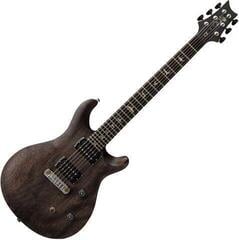
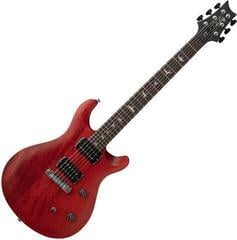
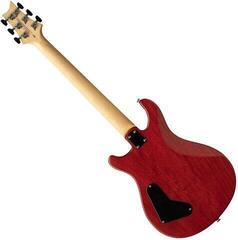
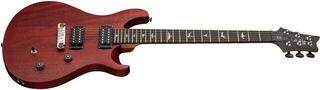
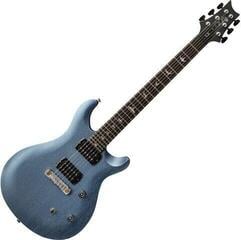
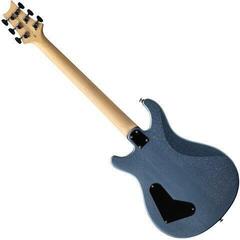
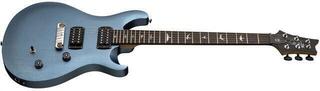
Doublecut guitars have two body cutaways around the neck, making the upper frets easier to reach. The shared shape covers lightweight rock instruments, modern models for technical playing and more traditional guitars with two humbuckers. Their character depends not only on the outline, but also on the pickups, scale length, neck joint, bridge and overall ergonomics. Start by considering how you play and what feels comfortable both seated and standing.
What a double-cutaway body offers
The two cutaways free up space around the neck heel. Your hand does not need to wrap as far around the body for solos, wide stretches and chords in high positions. The shape alone does not guarantee identical access on every model: body thickness, heel design and the position of the neck joint also matter.
Weight balance on a strap differs from a singlecut guitar. Some doublecuts are thin and light, while others have a more substantial body or a maple top. For long shows, check the weight and strap-button position. When seated, notice whether the guitar rotates and whether the controls obstruct your picking hand.
Who benefits most from a doublecut
Players who often use the upper register
A doublecut is practical for melodic solos, fusion, modern rock and technical riffs because the upper fingerboard is easier to reach. Check the fret count on the individual model: 22 frets can feel more traditional, while 24 extend the range and often accompany a more modern design.
Rhythm guitarists in a rock band
A fixed bridge and two humbuckers can provide a solid rhythm foundation, simple pickup switching and stable tuning. With heavy distortion, check whether the bridge pickup remains articulate and the low strings stay firm. For classic rock or blues, a lower-output pickup may respond more naturally to picking dynamics and the volume control.
Beginners who prioritise comfort
Upper-fret access is useful, but a first guitar also needs a comfortable neck, manageable weight, stable tuning and correctly adjusted action. Straightforward electronics with two pickups and a three-way switch are easy to understand. Also check scale length and neck width, because you feel them with every chord.
Pickups shape most of the character
Two humbuckers, or an HH configuration, are a common choice. The bridge pickup suits firm riffs and cutting leads; the neck pickup provides softer clean tones, blues phrases and fuller melodic lines. Coil splitting adds a brighter colour, although it will not necessarily sound exactly like a dedicated single-coil.
P90 pickups bring an open midrange and a responsive feel, but can pick up more hum. Active pickups offer a strong, even output and are often used for modern metal. Rather than choosing by pickup name alone, check its position, controls and switching options; the same type can behave differently in two guitars.
Neck, scale length and body joint
A shorter scale feels softer with the same string gauge and makes bends easier. A longer scale feels firmer, which can suit low tunings and precise rhythm work. Choose the neck profile for your hand and technique; a thinner neck is not automatically more comfortable if you need more support for chords.
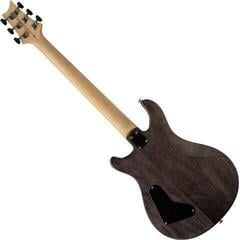
A bolt-on neck is practical to service and is often associated with a direct response. A set neck may create a smoother transition into the body, but the result depends on the execution. A neck-through design continues through the body and appears on selected models. For the buyer, heel shaping and unrestricted hand movement matter most.
Fixed bridge or tremolo
A fixed bridge simplifies string changes and usually makes returning to the same tuning easier. It suits players who change tunings or want to avoid spring adjustments. A tremolo changes pitch with an arm; check its range, string anchoring and service demands.
A double-locking tremolo allows pronounced movement in both directions, but string changes and tuning changes take longer. A simpler tremolo is friendlier for everyday use. Tuning stability also depends on the nut, tuners, correctly wound strings and the instrument’s overall setup.
Quick comparison by playing style
| Use | What to look for | Practical compromise |
|---|---|---|
| Blues and classic rock | Low- to medium-output humbuckers, responsive volume control, comfortable neck | A very hot pickup can reduce subtle dynamics |
| Hard rock and metal | Firm bridge pickup, stable tuning, easy upper-fret access | A tremolo adds options but requires more setup |
| Fusion and technical playing | 24 frets, sculpted neck heel, balanced body | A thin neck does not suit every hand |
| First electric guitar | Manageable weight, simple controls, comfortable action | More switches are not always more practical |
What to check before ordering
- Weight and balance when seated and on a strap.
- Fret count, heel shape and comfort above the 15th fret.
- Pickup type, controls and optional coil splitting.
- Scale length, neck profile and nut width.
- Bridge type and the time you want to spend changing strings or tunings.
- Package contents; a bag, strap or cable may not be included.
If this is your first doublecut, the guide on how to choose an electric guitar can help. For regular transport, choose an electric guitar bag with suitable internal dimensions and enough support around the neck.