 Albania
 Argentina
 Australia
 Austria
 Belgium
 Bosnia and Herzegovina
 Brazil
 Bulgaria
 Canada
 Chile
Chile
 Colombia
 Croatia
 Czech Republic
 Denmark
 Estonia
 Finland
 France
 Germany
 Greece
 Hungary
 Ireland
 Italy
Italy
 Latvia
 Lithuania
 Luxembourg
 Mexico
 Moldova
 Montenegro
 Netherlands
 New Zealand
 North Macedonia
 Norway
 Philippines
 Poland
 Portugal
 Romania
 Serbia
 Slovakia
 Slovenia
 South Africa
 Spain
Spain
 Sweden
 Switzerland
 Turkey
 Ukraine
 United Kingdom
 United States of America



How to choose a concert flute: a beginner guide
The concert flute is one of the most beautiful and versatile wind instruments, but it is easy to get lost among the models on your first purchase. We explain how it differs from the recorder, what to watch for in the keys and material, and which concert flute suits a beginner or a child.
What is a concert flute?
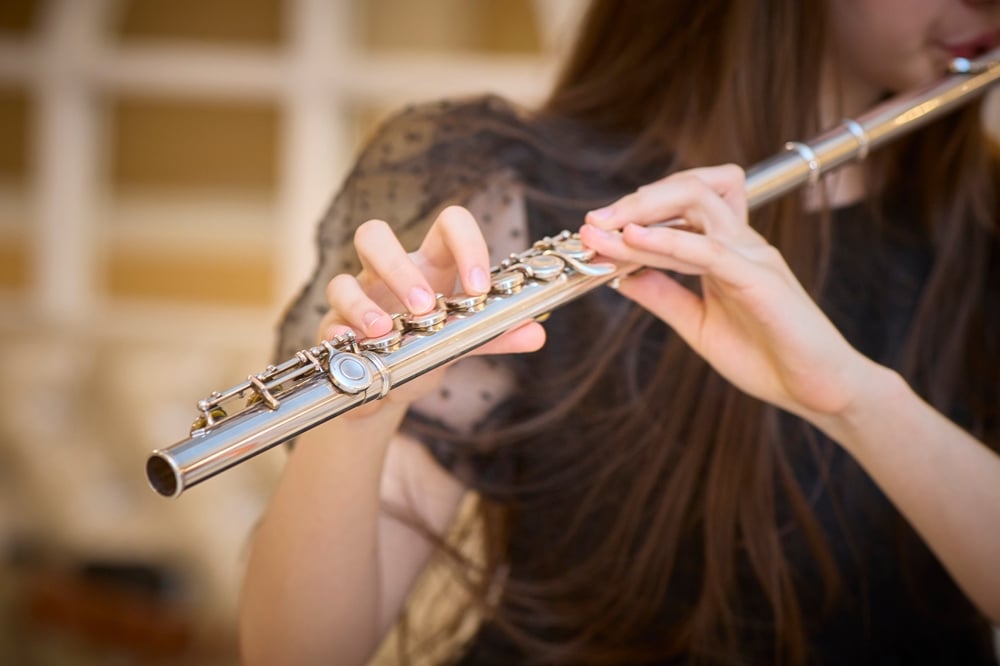
A concert flute is a wind instrument that you hold horizontally and play by blowing across a side hole, not into a mouthpiece like a recorder. It belongs among the wind instruments and is a staple of the classical orchestra and many modern genres. It is pitched in C and the tone is created by blowing over the hole, much like blowing across a bottle. That is the biggest challenge at the start, but also the most fun.
Concert flute vs recorder: what is the difference?
The recorder has a mouthpiece you simply blow into, so the start is easier and it is often the first instrument at school. The concert flute is harder to get a tone from, but it has a richer, fuller sound and wider use. If a child started on the recorder, the concert flute is the logical next step. How to pick a recorder is covered in how to choose a recorder.
Feature | Recorder | Concert flute |
|---|---|---|
Tone production | blow into mouthpiece (easy) | blow across the hole (harder) |
Hold | vertical | horizontal |
Good as | the very first instrument | second step, around age 8–10 |
Tuning | C | C |
Sound | soft, chamber-like | full, versatile |
How to choose a concert flute for a beginner?
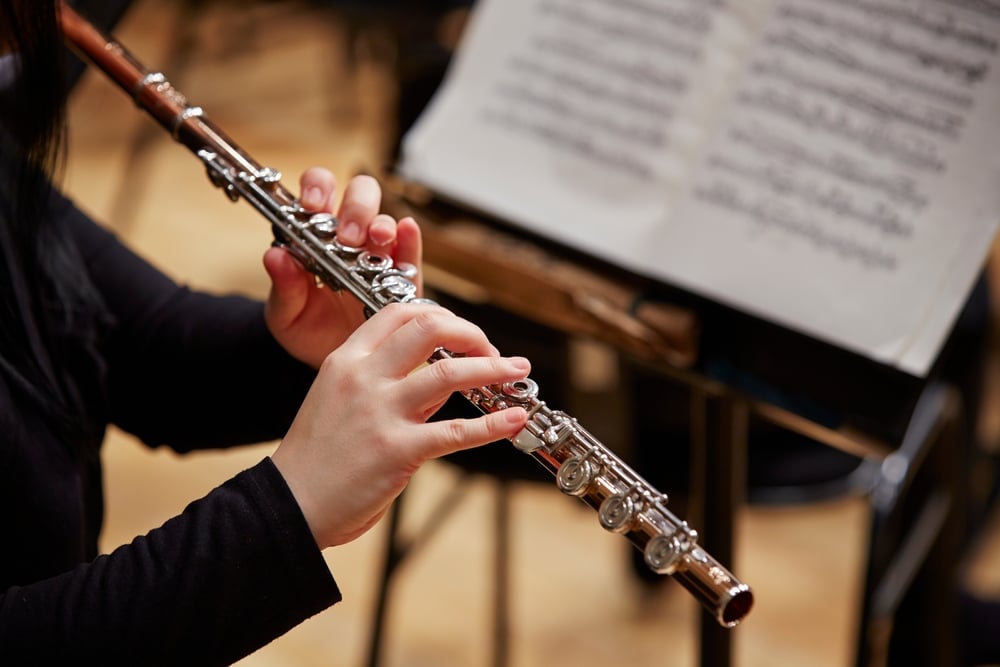
For a beginner, look for a so-called student concert flute in C with a silver-plated body. Three things matter: closed keys, the position of the G key and the split E mechanism. Closed keys (without holes) forgive imprecise fingers. An offset G key sits closer to the fingers and plays more comfortably. The split E mechanism makes the high E easier, a note beginners often struggle with.
Element | Recommendation for a beginner |
|---|---|
Keys | closed (without holes) |
G key | offset G |
Split E mechanism | yes, makes high E easier |
Material | silver-plated body |
Head joint | straight; curved for small children |
Proven student models can be found from Yamaha (the classic is the Yamaha YFL-212), Jupiter or Pearl.
From what age and which flute for a child?
With the concert flute you usually start around age 8 to 10, when the child has long enough arms and breath. For smaller children there are models with a curved head joint that shortens the reach and makes the instrument easier to hold. Once the child grows, you swap the head for a straight one.
Frequently asked questions about the concert flute
Is the concert flute hard for a complete beginner?
The hardest part is learning to produce a tone, which can take a few days to weeks. Once you get it, progress is quick. Closed keys and the split E mechanism make the start much easier.
Concert flute or recorder for a child?
As the very first instrument, the recorder is usually simpler. It is good to move to the concert flute around age 8 to 10, or earlier with a curved head joint model.
Which concert flute is best for a beginner?
A student flute in C with closed keys, offset G and a split E mechanism. Proven choices are the Yamaha YFL-212, Jupiter and Pearl.
How much does a concert flute cost?
Student concert flutes are affordable and fully sufficient for the first years of playing. Professional models with a silver head joint cost much more, but you do not need them at the start. You will find current prices in the concert flutes category.
Choose your concert flute
The concert flute will reward you with a beautiful tone if you pick a model that fits you. Have a look at the whole range of concert flutes, or recorders if you are just starting out. You will find more in the wind instruments category.