 Albania
 Argentina
 Australia
 Austria
 Belgium
 Bosnia and Herzegovina
 Brazil
 Bulgaria
 Canada
 Chile
Chile
 Colombia
 Croatia
 Czech Republic
 Denmark
 Estonia
 Finland
 France
 Germany
 Greece
 Hungary
 Ireland
 Italy
Italy
 Latvia
 Lithuania
 Luxembourg
 Mexico
 Moldova
 Montenegro
 Netherlands
 New Zealand
 North Macedonia
 Norway
 Philippines
 Poland
 Portugal
 Romania
 Serbia
 Slovakia
 Slovenia
 South Africa
 Spain
Spain
 Sweden
 Switzerland
 Turkey
 Ukraine
 United Kingdom
 United States of America







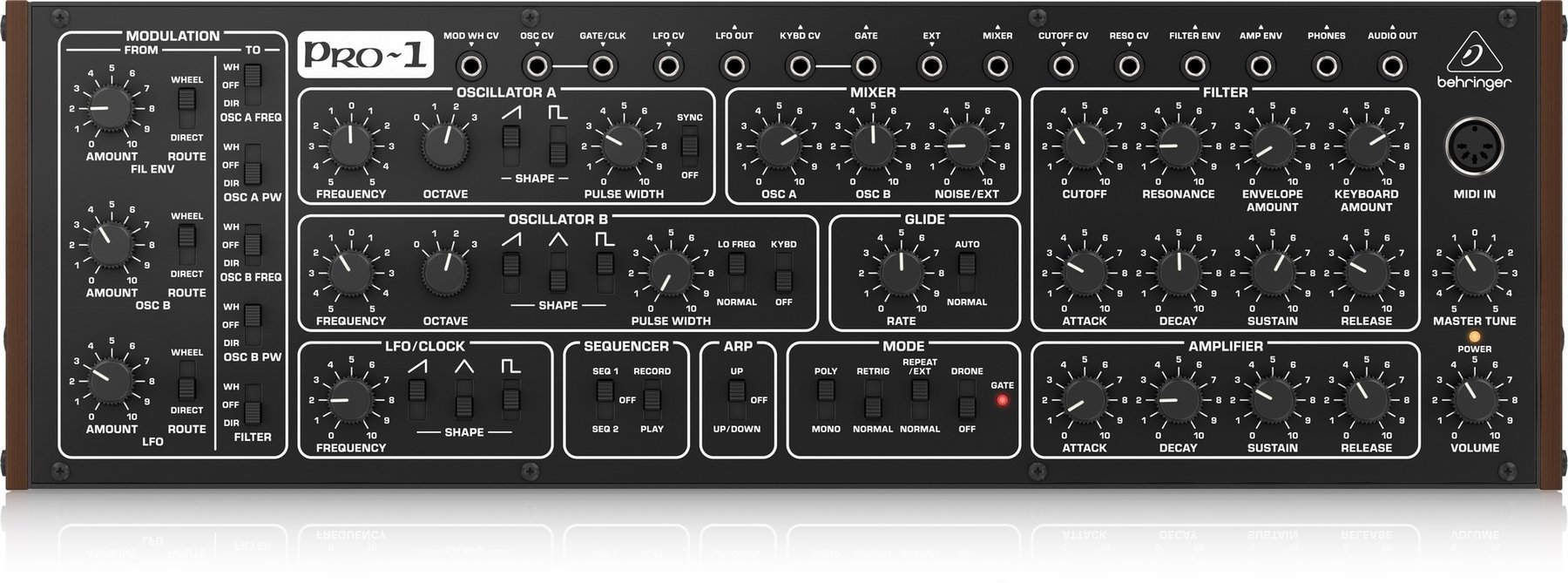
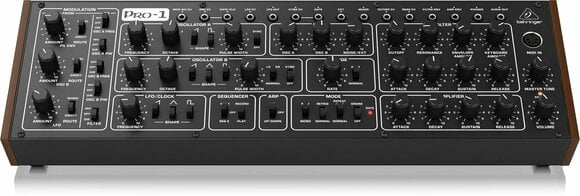
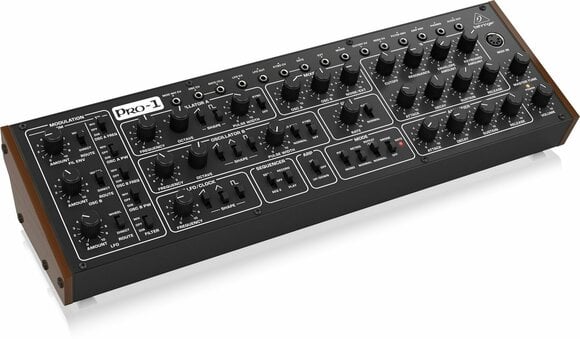
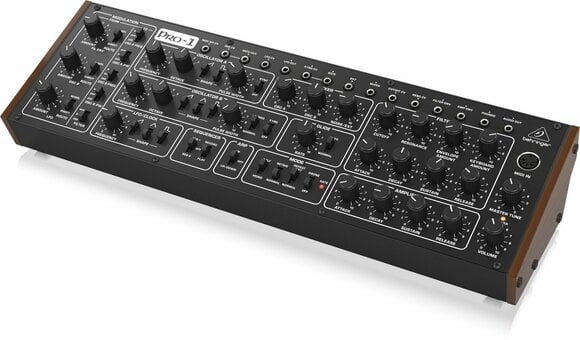
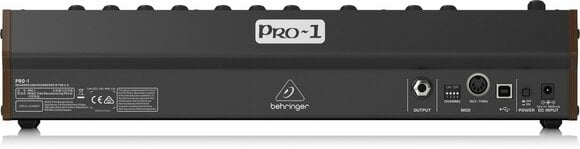
Behringer PRO-1 Synthesizer
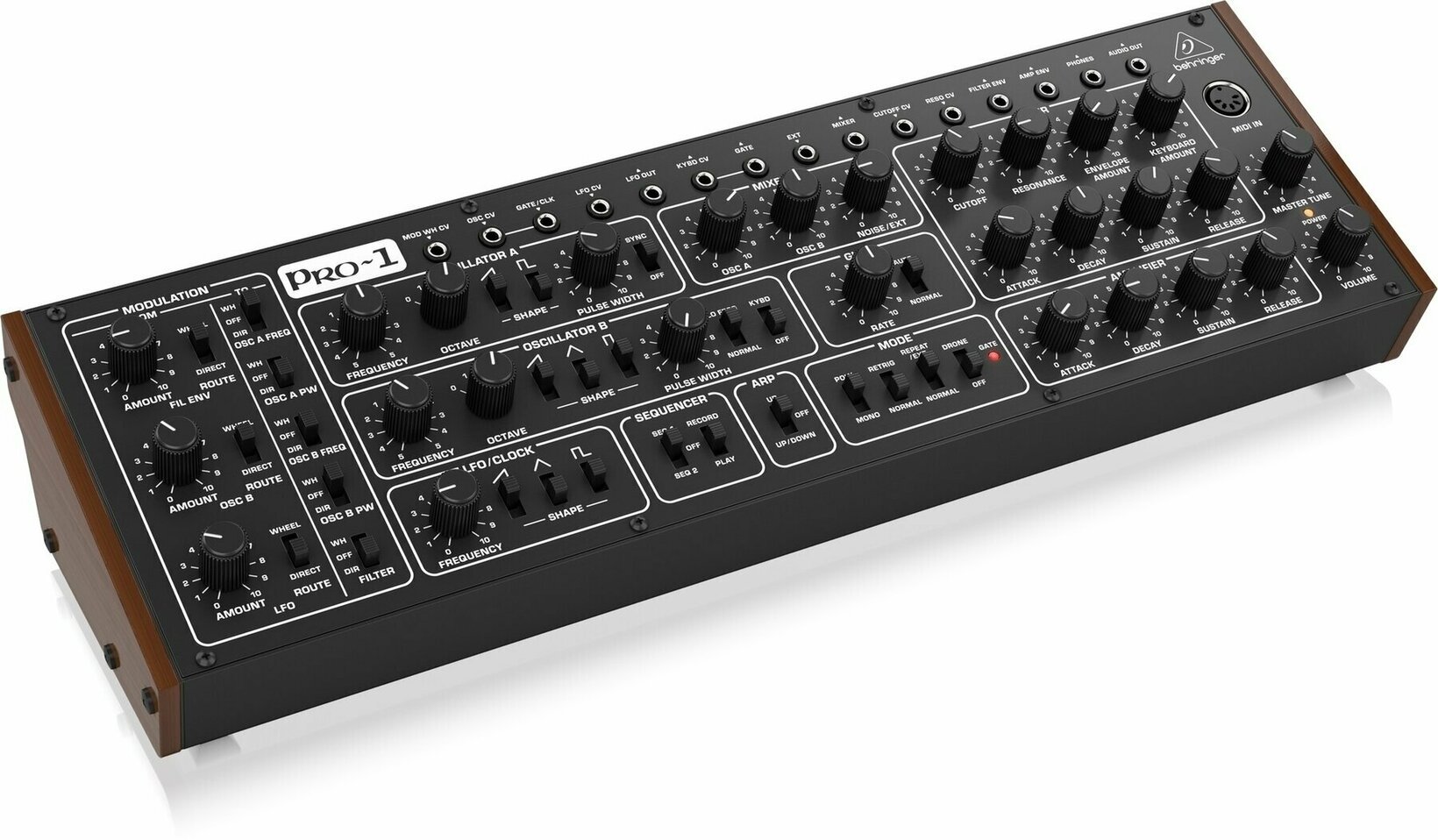
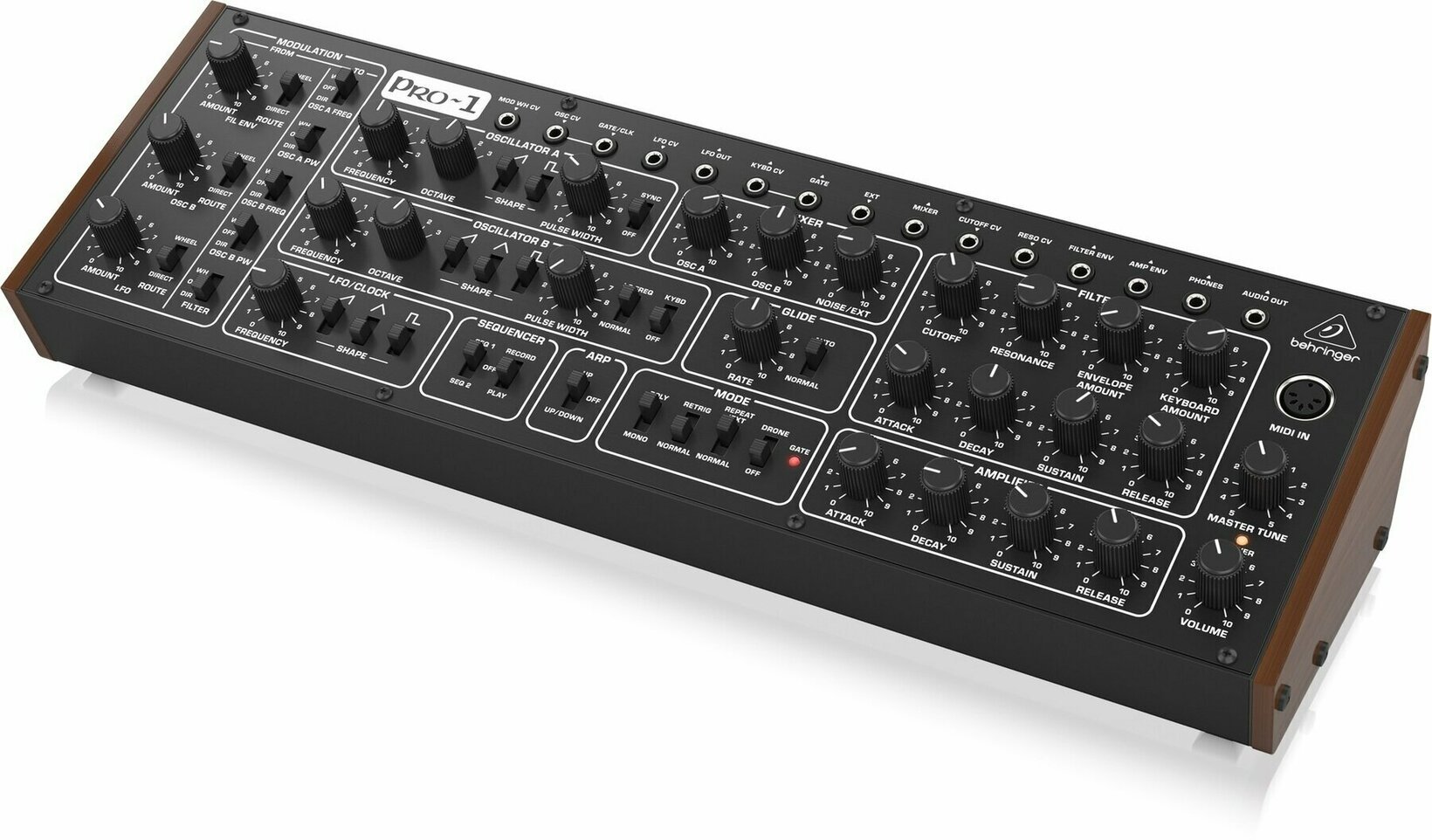
The Behringer PRO-1 Analog Synthesizer is a semi-modular desktop monosynth that recreates the Sequential Circuits Pro-One from 1981 at a fraction of the original cost. It packs dual analog VCOs, a self-oscillating 24 dB four-pole filter, and an all-analog signal path into a compact tabletop module.
- Dual analog VCOs with saw, pulse, and triangle waveforms plus pulse-width control and oscillator sync.
- Authentic 3340 and 3320 oscillator chips deliver the fat, characterful sound of the original early-'80s monosynth.
- 64-note dual step sequencer and arpeggiator with three patterns for hands-on pattern programming.
- Eurorack-compatible chassis with patch points, CV ins and outs, MIDI I/O, and USB MIDI.
Behringer PRO-1 Analog Synthesizer — Classic '80s Mono Sound, Modern Desktop Form
The Behringer PRO-1 Analog Synthesizer is a semi-modular tabletop monosynth inspired by the Sequential Circuits Pro-One, the 1981 monosynth heard on records by Depeche Mode, The Prodigy, and Vince Clarke. It packs the same dual-VCO architecture, 24 dB four-pole filter, and all-analog signal path into a compact Eurorack-ready desktop module. This model is the right choice for synth players who want that fat early-'80s bass and lead character without paying vintage prices.
What Sets This Module Apart in the Behringer Synth Line
Two design choices make this desktop monosynth stand out from typical analog clones. Authentic 3340 and 3320 oscillator semiconductors preserve the vintage-accurate voicing of the original Pro-One rather than relying on modern equivalents. The modulation section offers three sources (filter envelope, Oscillator B, and LFO) routable to five destinations across two mod busses, giving players a deep modulation matrix rarely found at this tier.
Dual Analog VCOs and a Self-Oscillating 24 dB Filter
The voice architecture is built around two analog VCOs with saw, pulse, and triangle waveforms, each with its own pulse-width control. Oscillator A includes a hard-sync switch, while Oscillator B can be switched to low-frequency mode and used as an extra LFO. The 24 dB/octave four-pole low-pass filter reaches full self-oscillation, producing the squelchy resonance that defined the original.
- Oscillators feature dual analog VCOs that provide saw, pulse, and triangle shapes with pulse-width control.
- Filter: 24 dB/octave 4-pole low-pass — self-oscillating for squelchy resonance and sine tones
- Semiconductors: Authentic 3340 and 3320 chips — vintage-accurate oscillator voicing
ADSR Envelopes, LFO, and Deep Modulation Routing
Two ADSR envelope generators shape the filter and amplifier independently. A dedicated analog LFO delivers simultaneous saw, triangle, and square waveshapes and doubles as an internal clock. The modulation matrix routes filter envelope, Oscillator B, and LFO to pitch, pulse-width, and filter cutoff across two mod busses.
- Envelopes: ADSR (filter) and ADSR (amplifier) — independent shaping of timbre and dynamics
- LFO: 1 analog LFO — saw, triangle, and square simultaneously, also acts as clock
- Modulation Sources: 3 (filter envelope, Osc B, LFO) — routable to 5 destinations via 2 mod busses
Built-In Sequencing and Full Studio Connectivity
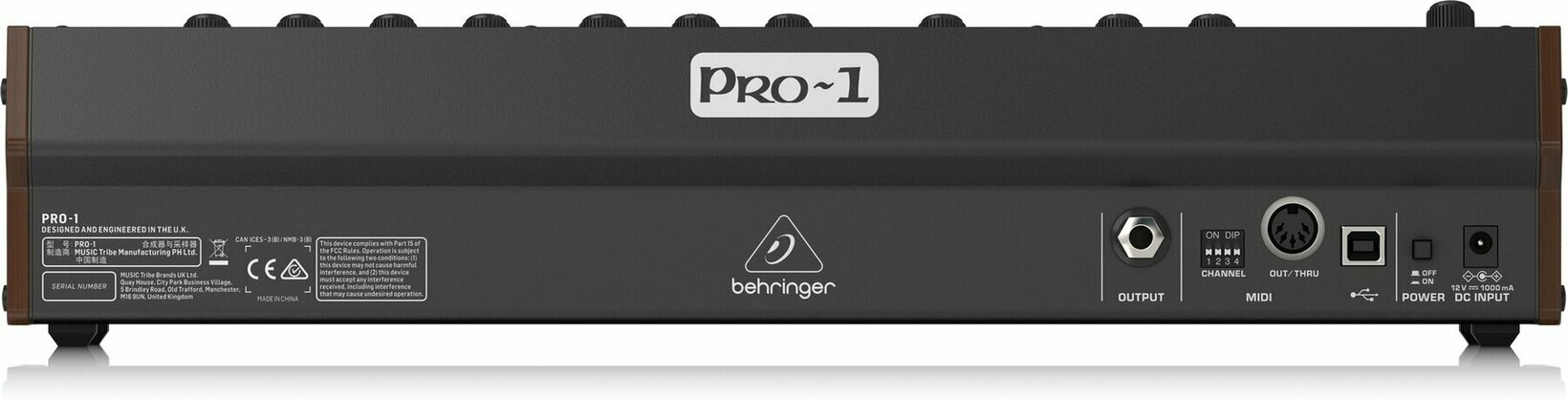
The PRO-1 includes a 64-note dual step sequencer and an arpeggiator with three patterns, plus a paraphonic two-note mode. Connectivity covers 5-pin MIDI in/out/thru, USB MIDI, six CV inputs, five CV outputs, an external audio input, and a headphone output port. The chassis is Eurorack-compatible and supports Poly Chain linking of up to 16 modules.
- Sequencer: 64-note dual step sequencer — switch between two sequences in real time
- Arpeggiator: 3 patterns (up, down, up/down) — hands-on pattern programming
- Headphone Output: Yes — private monitoring with both L/R channels
- Connectivity: MIDI I/O, USB MIDI, 6 CV ins, 5 CV outs — integrates with modular and studio setups
Ideal for Analog Synth Enthusiasts, Modular Players, and '80s Sound Fans
This synthesizer is the right choice for analog synth players who want the sound and workflow of the Sequential Circuits Pro-One without paying vintage collector prices. It suits electronic producers chasing classic '80s bass and lead tones, sound-design beginners who want every parameter visible on the front panel, and Eurorack users looking for a desktop voice with extensive CV patch points. Poly Chain support means a single module can grow into a 16-voice polysynth as the rig expands.
The Sequential Circuits Pro-One Legacy
The original Pro-One was a 1981 monosynth that became a defining voice of early-'80s electronic music. Artists including Depeche Mode, The Prodigy, Vince Clarke, and Thompson Twins used it on landmark recordings, and its dual-VCO architecture and squelchy four-pole filter became benchmarks for the era. Behringer's recreation preserves that circuit DNA through authentic 3340 and 3320 semiconductors.

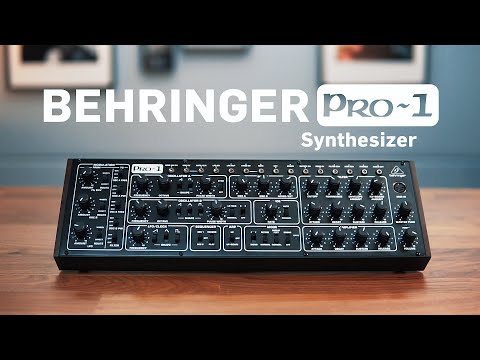
LFO: 1
An LFO, or low frequency oscillator, brings electronic sound to life. It adds movement and interest to synthetic sounds and effects, playing an important role in both subtle synthesis and bold sound design. However, you won't hear the LFO itself because it acts as a modulator. This means that it does not directly affect the audio signal, but adjusts other parameters such as oscillator pitch and filter clipping.
Envelope
- ADSR (amplifier)
- ADSR (filter)
Modulation: Yes
Modulation allows you to change different aspects of the sound in real time, opening up a wide range of creative possibilities. For example, it can affect the pitch of the sound, creating a vibrato effect, or it can change the amplitude of the signal, creating a tremolo effect. It can also adjust filtering to create smooth transitions between frequency bands and dynamic textures. Modulation can also be used to change the character of the sound depending on the time or intensity of playing, giving the sound a lively and moving character.

Sequencer: Yes
The sequencer provides musicians with a tool for composing and arranging music, allowing them to create and edit musical sequences. This feature allows you to record and play back repeating patterns. This makes it easy to create complex rhythms and melodies. The sequencer also allows you to layer different musical elements on top of each other, sync with other devices, and adjust parameters in real time. This flexibility makes the sequencer an invaluable tool for producing music, experimenting with new sounds and creating original compositions.
Arpeggiator: Yes
The Arpeggiator transforms chords into sequences of individual notes played in various rhythmic and melodic patterns. Instead of playing the chords as a harmonic whole, the Arpeggiator breaks the chords into individual notes and plays them sequentially according to the selected algorithm.
Headphone Output: Yes
The headphone output allows direct connection of headphones for private listening. This output provides a convenient way to enjoy the sound without disturbing others or ambient noise.
Inputs
- Jack 3,5 mm TRS
- MIDI IN
Outputs
- Jack 3,5 mm
- 6,3 mm Jack
MIDI Interface: Yes
It supports MIDI, allowing you to connect and communicate with other MIDI-compatible devices. This feature extends control and integration into the larger music environment, increasing flexibility and creativity in music creation.
Package Contents
- Manual
- Adapter

Тype
Desktop Synthesizer, Semi-modular
Aftertouch
LFO
Envelope
ADSR (filter), ADSR (amplifier)
Oscillators
Modulation
Arpeggiator
Effect Types
MIDI Interface
Bluetooth
Built-in Speaker
Headphone Output
Inputs
Outputs
Pedal Inputs
Microphone Input
USB
USB MIDI
Filter
Low Pass
Sequencer
Yes
UK/EU Power supply included
Width (cm)
42.4
Height (cm)
9.5
Depth (cm)
13.6
Weight
1,8 kg
Net Weight (kg)
1.8
Made in
China


Documents
Instructions for use
Manufacturer information
Safety instructions
Please refer to the user manual for the specific safety instructions for this product.


