 Albania
 Argentina
 Australia
 Austria
 Belgium
 Bosnia and Herzegovina
 Brazil
 Bulgaria
 Canada
 Chile
Chile
 Colombia
 Croatia
 Czech Republic
 Denmark
 Estonia
 Finland
 France
 Germany
 Greece
 Hungary
 Ireland
 Italy
Italy
 Latvia
 Lithuania
 Luxembourg
 Mexico
 Moldova
 Montenegro
 Netherlands
 New Zealand
 North Macedonia
 Norway
 Philippines
 Poland
 Portugal
 Romania
 Serbia
 Slovakia
 Slovenia
 South Africa
 Spain
Spain
 Sweden
 Switzerland
 Turkey
 Ukraine
 United Kingdom
 United States of America







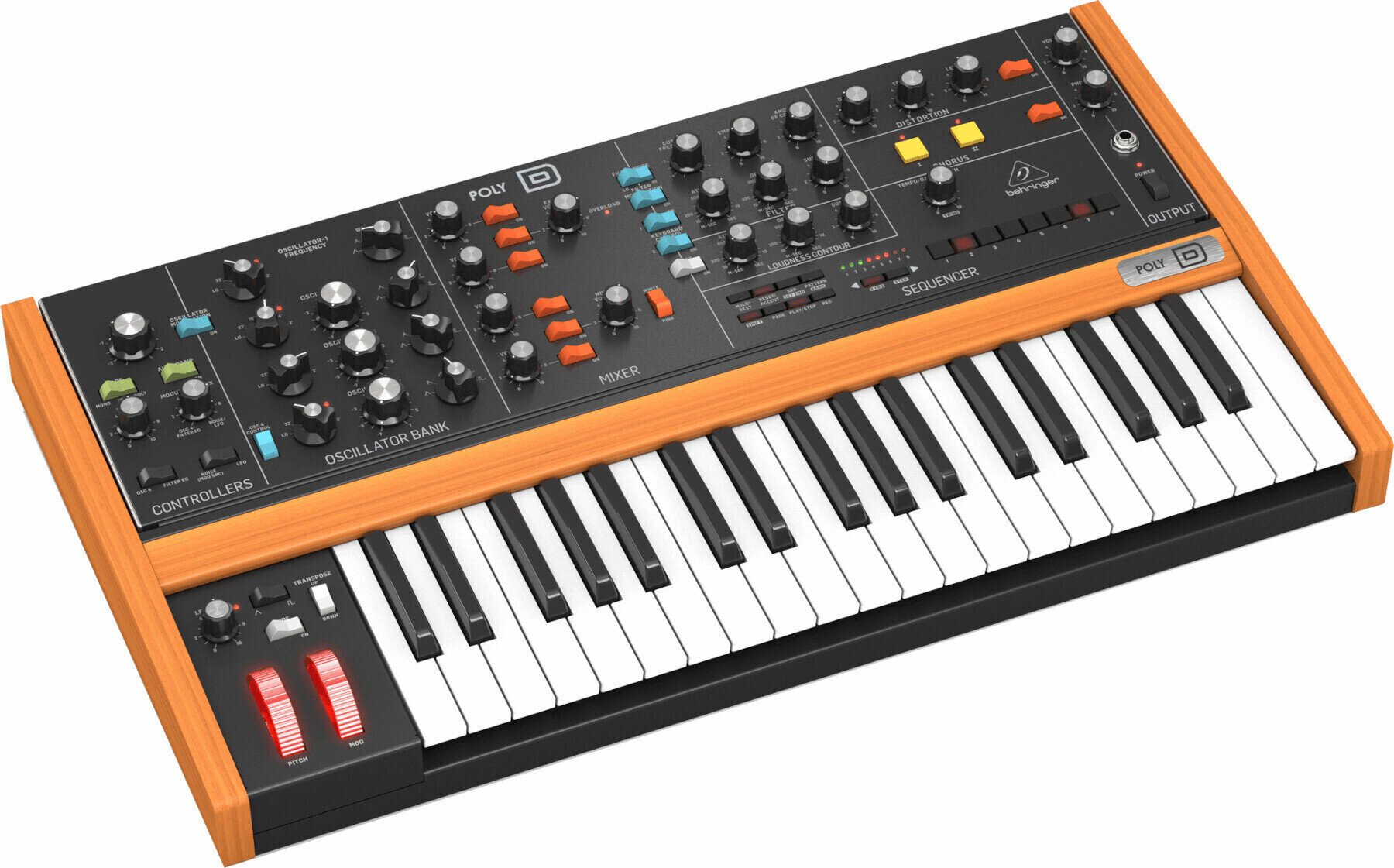
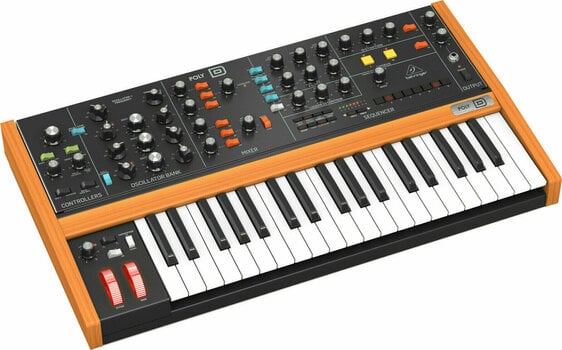
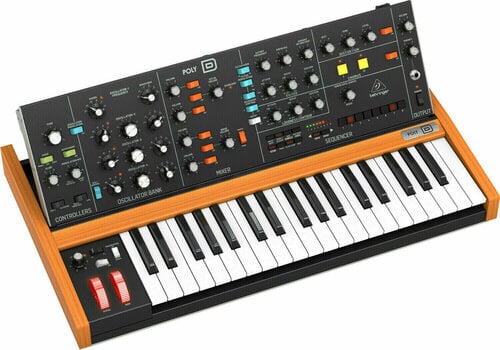
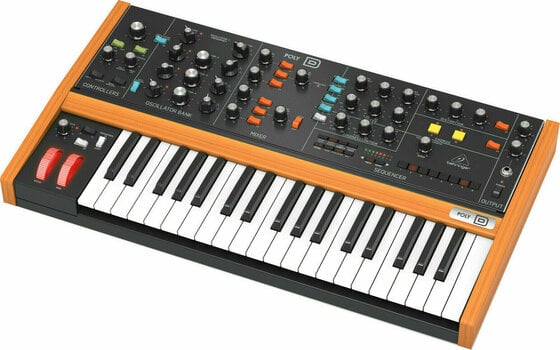

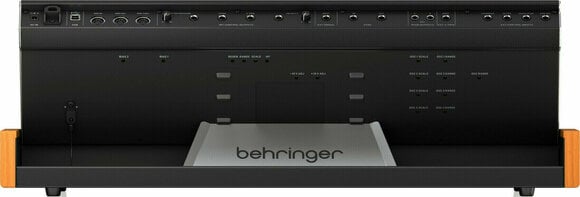
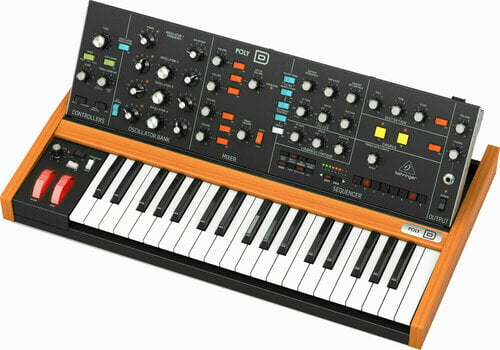

- Тype: Keyboard Synthesizer
- Sound Engine: Analog
- Number of Keys: 37
- Keyboard Type: Synth Action, Velocity sensitive
- Polyphony: 4
Behringer POLY D Synthesizer
The Behringer POLY D is an analog 4-voice polyphonic synthesizer that pays tribute to the iconic 1971 Minimoog Model D while adding modern features like a fourth oscillator, BBD stereo chorus, and onboard sequencer. With 37 full-size velocity-sensitive keys, an authentic 24 dB ladder filter, and a pure analog signal path, it delivers the fat basses and searing leads that defined progressive rock and synth-pop. Switchable Mono, Poly, and Unison modes let one player cover everything from expressive solos to lush chord pads.
- Four independent analog VCOs with five selectable waveforms each, spanning a six-octave range for massive sound design flexibility.
- Classic 24 dB ladder filter with switchable low-pass and high-pass modes plus dedicated envelope shaping for vintage character.
- Built-in 32-step sequencer and arpeggiator with 64 patterns across 8 banks, ready for hands-off performance and studio work.
- J60-modeled BBD stereo chorus and DS1-modeled analog distortion add width and grit without external pedals.
Behringer POLY D Analog Polyphonic Synthesizer — Four Voices of Classic Analog Power
The Behringer POLY D is a 4-voice analog polyphonic synthesizer built around the legendary architecture of the 1971 Minimoog Model D, expanded with modern performance features for today's keyboardists. Its pure analog signal path runs through authentic VCO, VCF, VCA, and ladder filter circuits, giving players the same fat basses, blistering leads, and progressive organ tones that defined an era of music. The POLY D is the right choice for synthesists who want genuine analog sound and real-time knob-per-function control without menu diving.
Four VCOs, Three Modes, and a Ladder Filter at the Core
What separates the POLY D from a standard mono reissue is its fourth voltage-controlled oscillator and switchable Mono, Poly, and Unison modes, letting a single instrument cover expressive leads, four-note chord harmonies, and stacked unison thickness. The 24 dB ladder filter with switchable low-pass and high-pass operation, plus dedicated Attack, Decay, and Sustain envelope controls, sits at the heart of its sound. J60-modeled BBD stereo chorus and DS1-modeled analog distortion circuits are integrated directly into the signal path, expanding the tonal palette without external pedals.
Keyboard, Polyphony, and Performance Controls
The 37-key semi-weighted keyboard with full-size keys, velocity sensitivity, and aftertouch gives performers expressive control over dynamics and modulation in real time. Four voices of polyphony, combined with the dedicated modulation wheel, pitch wheel, and glide control, make this instrument equally suited to studio composition and live performance. Players can route aftertouch, velocity, pitch, and V-Trigger signals out through dedicated 1/4" jacks to interface with modular gear and external processors.
- Keys: 37 full-size, semi-weighted — full-size keys with velocity and aftertouch for expressive playing
- Polyphony: 4 voices — plus Mono and Unison modes for one-voice leads and stacked thickness
- Aftertouch: Yes (After Pressure) — dedicated output jack with sensitivity control
- Modulation: Pitch and Mod wheels, Glide — classic performance controls for bending and vibrato
Oscillators, Filter, and Sound Engine
Four analog voltage-controlled oscillators form the sound source, each offering five selectable waveforms across a six-octave range (LO, 32', 16', 8', 4', 2'). OSC 1, 2, and 3 share triangular, triangular/saw, saw, square, wide pulse, and narrow pulse options, while OSC 4 adds a reverse saw wave and can be switched out of keyboard control to act as a fifth modulation source. The 24 dB ladder filter with switchable low-pass and high-pass modes, plus dedicated envelope shaping, gives the POLY D its signature vintage character.
- Oscillators: 4 analog VCOs — five waveforms each, six-octave range for deep sound design
- Filter: 24 dB Ladder, switchable LP/HP — vintage Moog-style tone with adjustable Emphasis and Contour
- LFO: 1 triangle/square wave — for slow filter sweeps and rhythmic modulation effects
- Envelope: ADS — Attack, Decay, and Sustain shaping for both VCA and VCF
Sequencer, Effects, and Connectivity
The onboard 32-step sequencer with 64 patterns across 8 banks, plus a built-in arpeggiator, makes the POLY D a self-contained performance and composition tool. Integrated BBD stereo chorus and analog distortion circuits add movement and grit without needing external effects. Full MIDI In/Out/Thru via both 5-pin DIN and USB Type B, plus dedicated control voltage inputs and outputs, allow deep integration with modular systems and DAW-based studios.
- Sequencer: 32 steps, 64 patterns, 8 banks — plus arpeggiator for generative performance
- Effects: BBD Stereo Chorus, analog Distortion — J60- and DS1-modeled circuits built into the signal chain
- MIDI: In/Out/Thru via USB and 5-pin DIN — class-compliant USB 2.0 for direct DAW integration
- Controls: 84 total knobs and switches — hands-on, menu-free operation
Who Is the Behringer POLY D For?
The POLY D is the right choice for synth players and producers who want classic analog tone with the flexibility of true polyphony at a working musician's price. It suits electronic music producers building basses and pads, learners exploring subtractive synthesis without menu diving, and live performers needing a road-ready instrument with wood-trimmed vintage aesthetics and 84 dedicated controls. Keyboardists coming from digital workstations will appreciate the immediate, hands-on workflow, while vintage synth enthusiasts get the ladder filter character and four-oscillator architecture that defined the original Model D era.
Behringer and the POLY D Story
Behringer was founded by Uli Behringer, born in 1961 in Baden, Switzerland, who built his first synthesizer, the UB-1, at age 17 before going on to establish the company. The POLY D draws directly on the 1970s portable analog synthesizer era, when artists like Jan Hammer, Chick Corea, Rick Wakeman, Jean-Michel Jarre, Isao Tomita, and Keith Emerson shaped the sound of progressive rock and electronic music. By adding a fourth oscillator, polyphonic capability, BBD chorus, distortion, and a 32-step sequencer to the original Model D concept, the POLY D brings that legacy into a modern performance instrument.
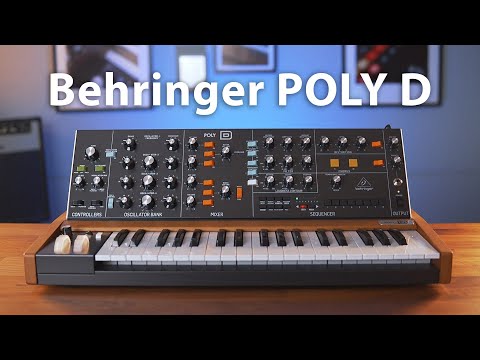
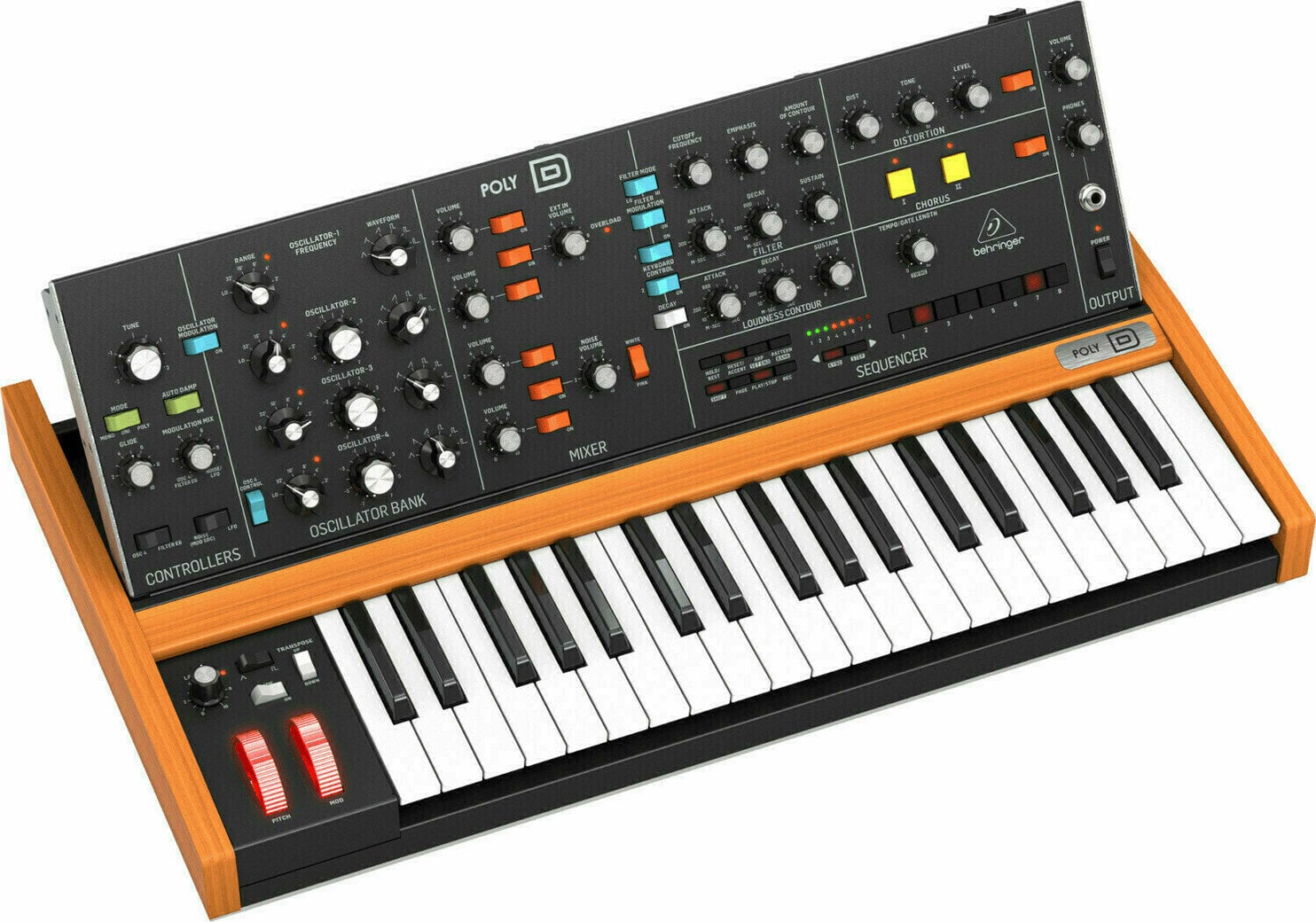
Number of Keys: 37
This instrument has 37 keys, equivalent to 3 octaves, providing a wide range of tones for a variety of musical applications.
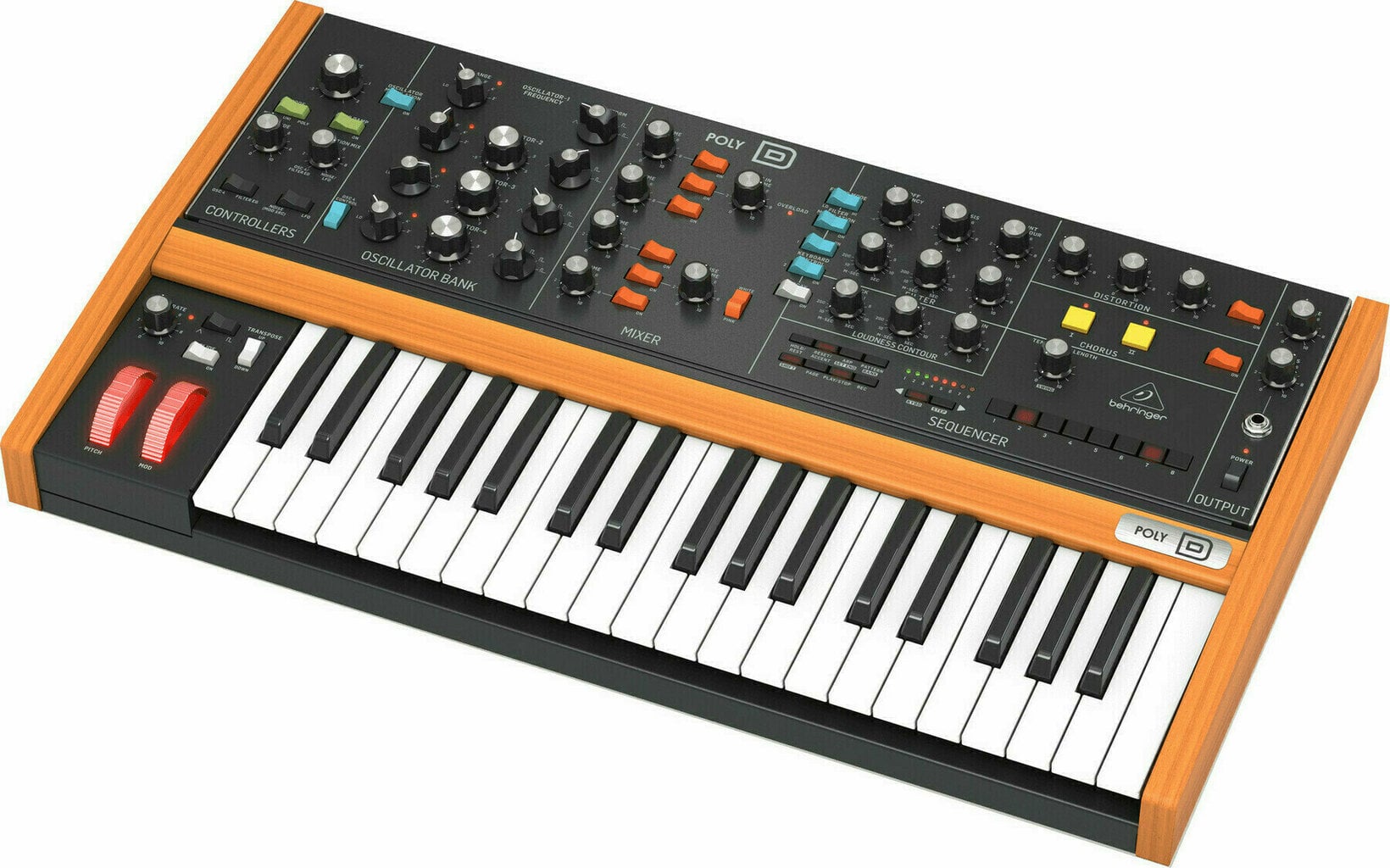
Keyboard Type
- Synth Action
- Velocity sensitive

Aftertouch: Yes
Aftertouch technology on the keys allows musicians to add a new level of expression to their playing. When a key reaches the bottom of its stroke, the pressure exerted on the key can continue to be sensed and used to control various aspects of the sound, such as vibrato, volume, or tone modulation.
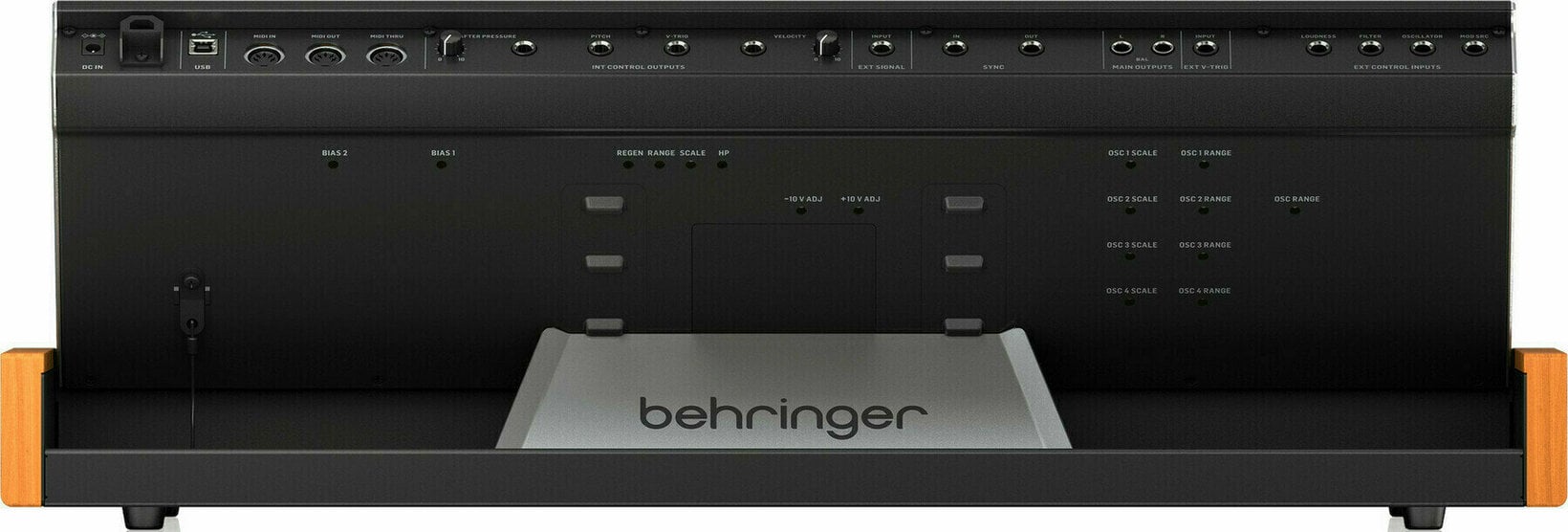
Polyphony: 4
The polyphony of this instrument allows up to <%=tp_value % notes to be played simultaneously, providing rich and complex musical possibilities.
LFO: 1
An LFO, or low frequency oscillator, brings electronic sound to life. It adds movement and interest to synthetic sounds and effects, playing an important role in both subtle synthesis and bold sound design. However, you won't hear the LFO itself because it acts as a modulator. This means that it does not directly affect the audio signal, but adjusts other parameters such as oscillator pitch and filter clipping.
Pitch Bend: Yes
The Pitch Bend allows smooth pitch changes, adding expressiveness to musical expression. Often used to create effects such as glissando or vibrato, this feature allows the player to make subtle or dramatic changes to the sound in real time. Pitch bend allows musicians to create smooth transitions between notes, increasing the dynamics and expressiveness of their performances.
Modulation: Yes
Modulation allows you to change different aspects of the sound in real time, opening up a wide range of creative possibilities. For example, it can affect the pitch of the sound, creating a vibrato effect, or it can change the amplitude of the signal, creating a tremolo effect. It can also adjust filtering to create smooth transitions between frequency bands and dynamic textures. Modulation can also be used to change the character of the sound depending on the time or intensity of playing, giving the sound a lively and moving character.
Sequencer: Yes
The sequencer provides musicians with a tool for composing and arranging music, allowing them to create and edit musical sequences. This feature allows you to record and play back repeating patterns. This makes it easy to create complex rhythms and melodies. The sequencer also allows you to layer different musical elements on top of each other, sync with other devices, and adjust parameters in real time. This flexibility makes the sequencer an invaluable tool for producing music, experimenting with new sounds and creating original compositions.
Arpeggiator: Yes
The Arpeggiator transforms chords into sequences of individual notes played in various rhythmic and melodic patterns. Instead of playing the chords as a harmonic whole, the Arpeggiator breaks the chords into individual notes and plays them sequentially according to the selected algorithm.
Effect Types
- Chorus
- Distortion
Headphone Output: Yes
The headphone output allows direct connection of headphones for private listening. This output provides a convenient way to enjoy the sound without disturbing others or ambient noise.
Inputs
- Sync IN
- Line Jack 6,3 mm
Outputs
- Sync OUT
- Jack 6,3 mm TS
MIDI Interface: Yes
It supports MIDI, allowing you to connect and communicate with other MIDI-compatible devices. This feature extends control and integration into the larger music environment, increasing flexibility and creativity in music creation.
Package Contents
- Manual
- Adapter

Тype
Keyboard Synthesizer
Aftertouch
LFO
Envelope
ADS (2 )
Oscillators
Modulation
Arpeggiator
Effect Types
MIDI Interface
Bluetooth
Sound Engine
Number of Keys
Keyboard Type
Synth Action, Velocity sensitive
Key Size
Standard
Polyphony
Pitch Bend
Yes
Storage Medium
Headphone Output
Inputs
Outputs
Pedal Inputs
USB MIDI
Filter
Low Pass, High Pass
Sequencer
Yes
Power Supply
Adapter
UK/EU Power supply included
Width (cm)
64.7
Height (cm)
8.9
Depth (cm)
36
Weight
11,5 kg
Net Weight (kg)
10.2
Made in
China


All reviews come from verified customers who have purchased a product from us in the past.
AI summary of reviews
Based on the number of reviews: 21
Strengths
- Authentic Analog Sound: Customers consistently praise the synthesizer's sound quality, noting its close resemblance to the original Minimoog and its suitability for analog music.
- Exceptional Value: Many reviewers highlight the product's affordability, stating it offers great sound and features for its price, making it a "best buy" for many.
- Build Quality: The synthesizer is described as having a solid and high-quality build, with components that feel substantial and well-fitted.
- Versatile Play Modes: The instrument offers polyphonic and monophonic modes, with customers finding the poly mode suitable for creating pad sounds and the mono mode comparable to a Minimoog with extra voices.
- Powerful Sequencer: The built-in sequencer significantly enhances the device's capabilities, despite some users finding its operation complex.
Weaknesses
- Build Quality Issues: Some users reported issues with the physical quality, such as loose rotary switches and missing decorative parts upon arrival, suggesting inconsistent quality control.
- Complex User Interface: The sequencer's operation is noted as complicated, and the user manual is considered unhelpful for beginners, making the learning curve steep for some features.
- Limited Chorus Control: The chorus effect, while generally liked, lacks adjustable parameters like wet/dry control, and the second chorus setting is perceived as excessive.
What customers repeat
Verdict
Documents
Instructions for use
Manufacturer information
Safety instructions
Please refer to the user manual for the specific safety instructions for this product.


