Albania
 Argentina
 Australia
 Austria
 Belgium
 Bosnia and Herzegovina
 Brazil
 Bulgaria
 Canada
 Chile
 Colombia
 Croatia
 Czech Republic
 Denmark
 Estonia
 Finland
 France
 Germany
 Greece
 Hungary
 Ireland
 Italy
 Latvia
 Lithuania
 Luxembourg
 Mexico
 Moldova
 Montenegro
 Netherlands
 New Zealand
 North Macedonia
 Norway
 Philippines
 Poland
 Portugal
 Romania
 Serbia
 Slovakia
 Slovenia
 South Africa
 Spain
 Sweden
 Switzerland
 Turkey
 Ukraine
 United Kingdom
 United States of America



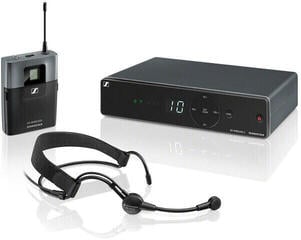
Wireless Headset Systems
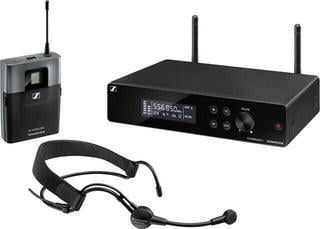
A wireless headset system sends your voice from a microphone near your mouth to a receiver while leaving your hands free. It suits singing, presenting, teaching and fitness classes where a handheld microphone would get in the way. A set usually combines a headworn or earworn microphone, bodypack transmitter and receiver, so these components must be compatible. When choosing, consider how it is worn, the permitted frequency band, power supply and the number of systems operating together.
Headset, earset or lavalier microphone
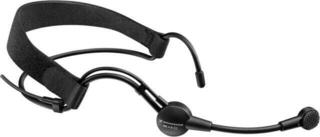
A headset rests on both ears or wraps around the head, keeping the capsule close to your mouth even during vigorous movement. The short distance from the voice provides a good signal-to-ambient-noise ratio and may reduce feedback compared with a microphone placed farther away. Position the boom correctly: it should not sit directly in the airflow from your mouth or touch your face.
An earset hooks over one or both ears and is less conspicuous on the face. Shape, weight and stability matter during a long programme, especially if you wear glasses. A lavalier microphone clips to clothing and suits calmer delivery, but it sits farther from the mouth and the level may change as you turn your head. If this format is more suitable, browse wireless lavalier systems.
| Use | Suitable design | What to look for |
|---|---|---|
| Stage vocals and presenting | Stable headset with the microphone close to the mouth | Secure fit, durable cable and feedback control |
| Lectures or teaching | Lightweight headset, earset or lavalier system | Comfort, speech intelligibility and easy muting |
| Fitness and dance | Headset designed for intensive movement | Moisture protection, transmitter security and replaceable parts |
| Theatre and discreet capture | Small earset | Colour, cable routing, precise fit and careful handling |
The band must suit the place of use
A wireless system operates in a specific band governed by local regulations. Before buying, check that the version is intended for the country and venue where it will be used. The same model name may be available in several frequency versions. When crossing borders, do not assume that settings used at the previous event remain suitable.
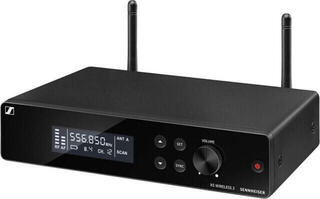
With several sets, simply counting receivers is not enough. Channels must be frequency-coordinated to avoid mutual interference, while other wireless devices in the building also affect the environment. Automatic frequency scanning makes setup easier, but scan at the venue and test under real operating conditions. Position the receiver so its antennas are not screened by metalwork.
Analogue and digital transmission
Both can work reliably, but differ in signal processing, latency, behaviour under weak reception and demands on the RF environment. With a digital system, check end-to-end latency, especially when a singer also uses in-ear monitoring. With analogue, watch input sensitivity and potential noise. Judge the entire setup, not the transmission label alone.
Microphone connector and compatibility
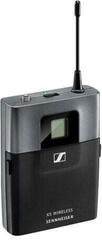
A headworn microphone connects to the bodypack through a connector that is not automatically interchangeable between manufacturers or even product ranges. An identical shape does not guarantee the same wiring or power. To use an existing microphone, verify the exact connector and list of supported transmitters. An adapter solves only the mechanical connection, not mismatched electrical characteristics.
Separate parts are useful for expansion or servicing; browse cases and accessories for audio equipment and always verify compatibility in the documentation. Some sets contain several microphones, but do not assume this from the photograph. Compare the package contents item by item.
Comfort during extended wear
Put the microphone on before the soundcheck. Adjust the boom so the capsule stays by the corner of your mouth without catching your breath. Route the cable without sharp bends, leaving a little slack near the head, and secure the transmitter to a belt, clothing or suitable pouch. During dancing, it must not strike the body or come loose during sudden movement.
- Glasses, earrings and hair can affect both comfort and stability.
- Sweat and cosmetics shorten the life of sensitive parts; clean them after use as instructed.
- A foam windscreen reduces breath noise but must fit the specific capsule.
- A very thin cable is easier to conceal but needs more careful handling when packing.
Power and performance preparation
Runtime depends on the transmitter, cell type and use. Fit charged rechargeable cells or fresh batteries before the event and keep a labelled replacement ready. For rechargeable systems, check the charge during preparation rather than just before going on. The status indicator is a guide; plan a safety margin and a safe replacement procedure.
- Verify the permitted band and scan frequencies at the venue.
- Set input sensitivity during the loudest part of the performance.
- Walk the full area and check for dropouts and mechanical noise.
- Check monitoring and gain before feedback.
- After the soundcheck, lock important settings if the system allows it.
When another system is more suitable
A singer who wants to hold the microphone may prefer wireless handheld systems. Wireless systems for XLR microphones are designed for an existing dynamic microphone with an XLR output. Choose a headset when free hands and a constant mouth-to-microphone distance matter more than being able to move the microphone away. Base the decision on what you do during the performance: a headset maintains a fixed distance, while a handheld microphone lets you vary your technique deliberately. Stage size is secondary.