 Albania
 Argentina
 Australia
 Austria
 Belgium
 Bosnia and Herzegovina
 Brazil
 Bulgaria
 Canada
 Chile
Chile
 Colombia
 Croatia
 Czech Republic
 Denmark
 Estonia
 Finland
 France
 Germany
 Greece
 Hungary
 Ireland
 Italy
Italy
 Latvia
 Lithuania
 Luxembourg
 Mexico
 Moldova
 Montenegro
 Netherlands
 New Zealand
 North Macedonia
 Norway
 Philippines
 Poland
 Portugal
 Romania
 Serbia
 Slovakia
 Slovenia
 South Africa
 Spain
Spain
 Sweden
 Switzerland
 Turkey
 Ukraine
 United Kingdom
 United States of America



Semiacoustic Guitars
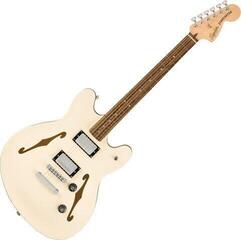
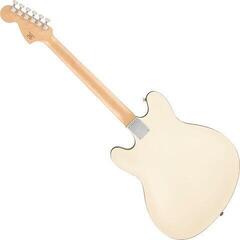
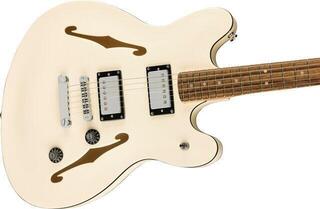
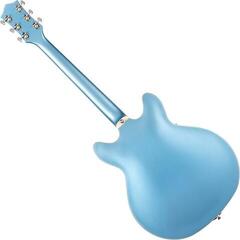
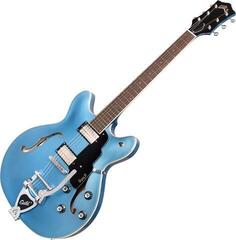
A semi-acoustic guitar combines electric pickups with a body containing hollow or partly hollow resonant spaces. Compared with a standard electric guitar, it often sounds more open and gives stronger physical feedback from the body. The category includes compact semi-hollow models, larger hollowbody instruments and different bridges and pickups. The right choice depends on playing volume, desired tone, body size and comfort.
Semi-hollow and hollowbody are not the same
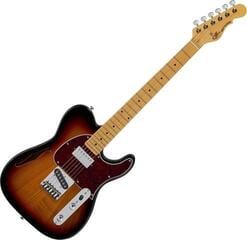
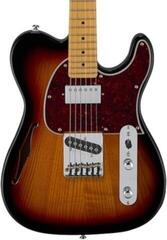
A semi-hollow guitar has a solid centre block with hollow sides. The block reinforces the construction, supports the bridge and helps keep feedback under control at higher volume. It suits blues, rock, soul, indie and jazz, covering clean tones, crunch and moderate distortion.
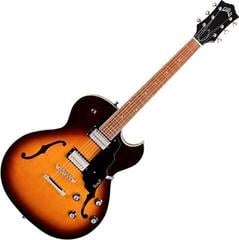
A hollowbody is hollow through more of its body and often has a larger outline. Its acoustic response is more noticeable, but feedback can occur sooner at high volume or gain. It is popular for jazz, swing, rockabilly and soft accompaniment. Manufacturers do not always use the labels identically, so check the construction of each model.
Who is a semi-acoustic guitar for?
Blues and rock players
A semi-hollow with a centre block provides a full midrange and lively response without behaving like a large hollow body at every increase in gain. Two humbuckers can cover a soft neck tone and a firmer bridge sound. If you use more gain, consider cavity size and how the instrument behaves at your normal volume.
Jazz players and fans of clean tone
A larger hollowbody, a neck pickup and smoother-surface strings can create a soft tone with restrained treble. Neck width, upper-register access and bridge type also matter. For complex chords, left-hand comfort and body balance matter more than the finish.
Singer-songwriters and home players
A semi-acoustic responds pleasantly during quiet practice without amplification, although it does not match the volume of an acoustic guitar. Plugged in, it covers clean accompaniment, light overdrive and layered guitar parts. For home recording, consider pickup hum, mechanical noise and how quickly feedback develops at higher volume.
Body, comfort and fret access
Body size changes the position of your picking arm and seated comfort. A larger body may feel natural to an acoustic guitarist, while its depth can obstruct a smaller player. A compact semi-hollow feels closer to an electric guitar and is often more practical for long periods of standing.
One or two cutaways affect upper-fret access, but not the whole playing feel. Also check the neck heel, fret count and body joint. Compare weight and dimensions before ordering, especially if you travel with the instrument often.
How to choose pickups
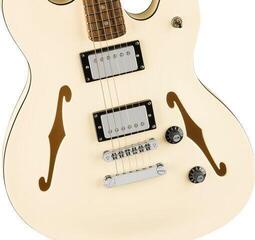
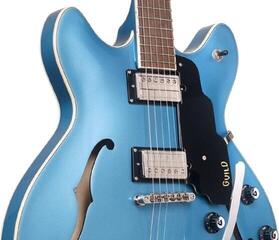
Humbuckers are common because they provide a full tone and suppress most hum. The neck pickup suits soft cleans and jazz chords; the bridge pickup adds definition for blues and rock. Match pickup output to your amplifier and effects—more output is not automatically better.
P90 pickups sound more open and aggressive and respond well to dynamics, but may produce more hum. Filter’Tron-style pickups are associated with a brighter attack and rockabilly or retro character. Piezo pickups appear only on selected models and add a different colour from magnetic pickups; they do not replace a miked acoustic sound.
Bridge, tailpiece and tremolo
A fixed bridge with a separate tailpiece is a traditional solution. On some hollowbody guitars the bridge rests on the top without permanent anchoring, so take care when removing all strings at once. Tune-o-matic and similar bridges simplify intonation and action adjustment.
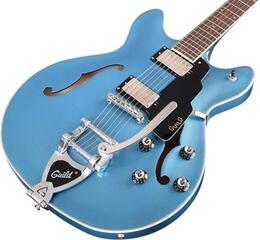
A Bigsby-style tremolo allows subtle pitch changes and supports a retro playing style. It is not intended for extreme arm movement. Check string routing, tuning stability and how much time you want to spend on string changes.
Feedback: a problem and a creative tool
Hollow spaces react to amplifier volume. Standing near the speaker with heavy distortion can excite unwanted notes in the body. Changing position, reducing gain or volume, or choosing a model with a solid centre block can help.
Controlled feedback can be part of a rock sound, but it can disrupt clean jazz or accompaniment. At home it may not be decisive. For a loud rehearsal room or stage, give it as much attention as the pickups.
Basic construction comparison
| Construction | Feel and sound | Louder playing | Typical use |
|---|---|---|---|
| Semi-hollow with centre block | Open response with a firmer electric-guitar feel | Better feedback control than a fully hollow body | Blues, rock, soul, indie, jazz |
| Hollowbody | Strong body resonance and a soft, open character | More sensitive to feedback | Jazz, swing, rockabilly, clean accompaniment |
| Chambered solid body | Lower weight and a subtle effect of cavities on response | Behaves more like a conventional electric guitar | Versatile use depending on pickups and construction |
Practical checks before buying
- Confirm whether the guitar is semi-hollow with a centre block, hollowbody or chambered.
- Compare body width, depth and weight for seated and standing playing.
- Choose pickups by dynamics, hum and the amount of distortion you use.
- Check the bridge and tailpiece, especially if you change strings yourself.
- Consider feedback behaviour for loud playing.
- Match a bag or case by internal dimensions, not only the label “electric guitar”.
The right set of electric guitar strings affects feel and tone. For frequent transport, a rigid electric guitar case is safer, but it must fit the specific semi-acoustic instrument.