 Albania
 Argentina
 Australia
 Austria
 Belgium
 Bosnia and Herzegovina
 Brazil
 Bulgaria
 Canada
 Chile
Chile
 Colombia
 Croatia
 Czech Republic
 Denmark
 Estonia
 Finland
 France
 Germany
 Greece
 Hungary
 Ireland
 Italy
Italy
 Latvia
 Lithuania
 Luxembourg
 Mexico
 Moldova
 Montenegro
 Netherlands
 New Zealand
 North Macedonia
 Norway
 Philippines
 Poland
 Portugal
 Romania
 Serbia
 Slovakia
 Slovenia
 South Africa
 Spain
Spain
 Sweden
 Switzerland
 Turkey
 Ukraine
 United Kingdom
 United States of America



Lighting Stands
Lighting stands provide firm support for lighting equipment at concerts, theatre performances and other events. They help position lights at the required height and aim them to suit the venue or programme. A well-chosen stand makes work easier for a mobile DJ, band, event technician or user of a small studio. The safety of the setup, however, always depends on observing the load capacity, assembling it correctly and accounting for conditions at the venue.
The range includes stands for different setups and environments. They vary in working height, load capacity, base design, number of mounting points and folded dimensions. Adjustability helps you position lights for a particular stage, while a compact design makes transport easier when equipment is moved frequently.
Match the stand type to your setup
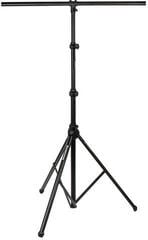
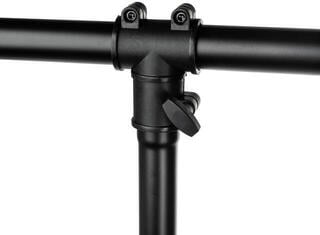
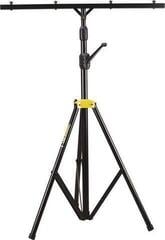
A stand with a T-bar is useful when you need to mount several lighter lights in one place. When planning the setup, include not only the fixtures but also the T-bar, clamps, cables and other accessories. Distribute the load evenly and follow the instructions from the manufacturers of both the stand and the mounted equipment.
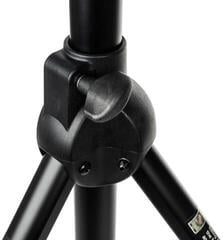
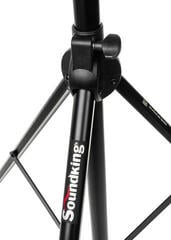
A compact tripod stand suits a mobile DJ or technician who frequently packs, loads and carries equipment. Check its folded dimensions as well as the space taken up by the fully spread legs. For a larger spotlight or follow spot, choose a solution intended for the relevant mounting method and equipment weight; appearance alone does not determine whether a stand is suitable.
| Use | What to compare | What to consider |
|---|---|---|
| Several lighter lights | T-bar, number of mounting points, total load capacity | Distribute the load evenly |
| Mobile DJ or smaller event | Stand weight, folded dimensions, working height | Space to spread the legs safely |
| Larger spotlight or follow spot | Intended use, mounting compatibility, load capacity | Check the technical data sheet for the specific model |
How to choose load capacity, height and base
Calculate the required load capacity from the actual weight of the complete setup, not just the lights. Include mounting hardware, the crossbar and every accessory supported by the stand. Do not exceed the stated load capacity or estimate your own safety margin; the manufacturer's specifications and prescribed loading method are what matter.
Choose the working height according to the size of the space, the direction of the light and whether the stand could obstruct performers or visitors. Extending the stand higher changes how the complete setup behaves, so assess height together with the base dimensions and equipment weight. A compact footprint may matter more on a small stage, but it must not lead to the legs being positioned incorrectly.
Assembly and safe use
- Set up the stand on a firm, level surface and check that the legs are properly secured.
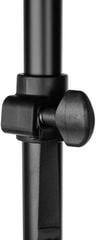
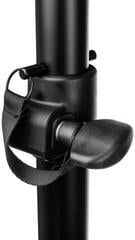
- Tighten adjustment and mounting parts according to the instructions; use compatible clamps and the specified safety devices.
- Route cables so that nobody can trip over them and they cannot pull the stand sideways.
- During use, check the connections, stand position and any changes in the surrounding conditions.
- When working at height, follow local site rules and use protection appropriate to the specific situation.
Before buying, note the weight of the complete setup, required working height, number of mounting points and transport needs. If you are unsure about compatibility or permitted loading, check the technical data sheet for the specific stand or contact specialist support. You can find more stage equipment in the Lighting category.