 Albania
 Argentina
 Australia
 Austria
 Belgium
 Bosnia and Herzegovina
 Brazil
 Bulgaria
 Canada
 Chile
Chile
 Colombia
 Croatia
 Czech Republic
 Denmark
 Estonia
 Finland
 France
 Germany
 Greece
 Hungary
 Ireland
 Italy
Italy
 Latvia
 Lithuania
 Luxembourg
 Mexico
 Moldova
 Montenegro
 Netherlands
 New Zealand
 North Macedonia
 Norway
 Philippines
 Poland
 Portugal
 Romania
 Serbia
 Slovakia
 Slovenia
 South Africa
 Spain
Spain
 Sweden
 Switzerland
 Turkey
 Ukraine
 United Kingdom
 United States of America



Entertainer Keyboards
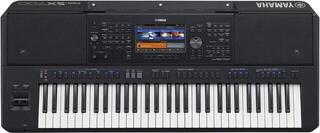
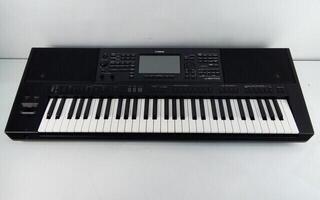
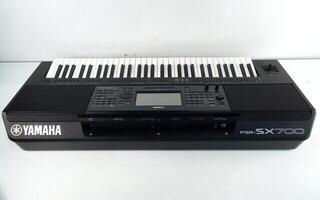
Professional keyboards are designed for musicians who need to prepare songs, edit sounds and operate their instrument confidently in rehearsals, on stage or in the studio. The number of sounds is not the only consideration; how quickly they can be selected, layered and split across the keyboard matters as well. Some models focus on automatic accompaniments and arranging, while others add a sequencer, sampling or deeper tools for creating custom sounds. The right choice therefore depends on your workflow and musical style.
Arranger or workstation
An arranger keyboard helps you lead a song with styles, accompaniments, fills and variations controlled while you play. A workstation is usually geared more towards detailed production, sound programming and multitrack composition. These capabilities can overlap, so the product label alone should not decide your choice. Check which functions you can call up immediately and which ones require preparation in advance.
| Use | What to prioritise | What to check |
|---|---|---|
| Live performance with accompaniment | Fast style changes, variations and registrations | Control layout, outputs and pedal connections |
| Band and stage setup | Sound layers and splits, instant recall of settings | Separate audio outputs, MIDI/USB and display readability |
| Studio production | Sequencer, sound editing and software integration | Data transfer formats, audio interface and expansion options |
Sounds, effects and control
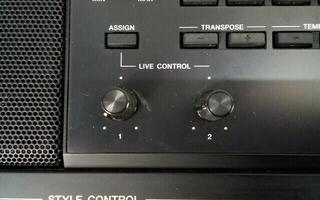
A large sound bank is useful when you can navigate it quickly and save your own combinations. Check the options for layering, splitting the keyboard, editing effects and storing settings for individual songs. For regular performances, a clear display, a logical button layout and smooth switching between prepared setups also matter. Players who create their own arrangements will value precise editing, data import and enough storage for user content.
Connectivity for stage and studio
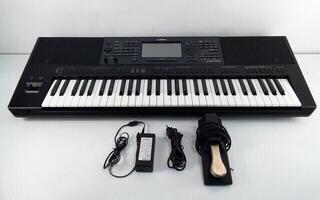
Before buying, sketch out the setup that the keyboard needs to join. Check the main and any separate audio outputs, pedal inputs, MIDI or USB, the headphone output and the file-transfer method. If you want to record audio directly into a computer, confirm whether the model supports it or whether you will need a separate audio interface. For frequent transport, dimensions, weight, case strength and the availability of a suitable bag or case are important too.