Albania
 Argentina
 Australia
 Austria
 Belgium
 Bosnia and Herzegovina
 Brazil
 Bulgaria
 Canada
 Chile
 Colombia
 Croatia
 Czech Republic
 Denmark
 Estonia
 Finland
 France
 Germany
 Greece
 Hungary
 Ireland
 Italy
 Latvia
 Lithuania
 Luxembourg
 Mexico
 Moldova
 Montenegro
 Netherlands
 New Zealand
 North Macedonia
 Norway
 Philippines
 Poland
 Portugal
 Romania
 Serbia
 Slovakia
 Slovenia
 South Africa
 Spain
 Sweden
 Switzerland
 Turkey
 Ukraine
 United Kingdom
 United States of America



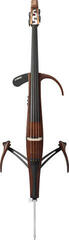
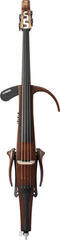
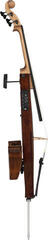
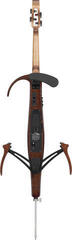
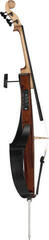
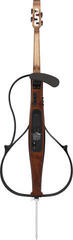
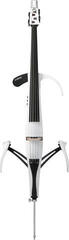
Electric Cellos
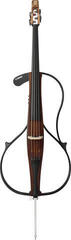
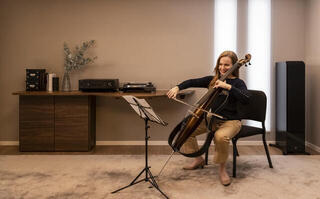
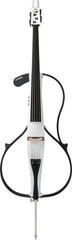
An electric cello replaces the resonant body with a pickup and a frame with supports. It makes amplification, the use of effects and, depending on its features, practising with headphones easier. Playability, however, depends on the scale length, bridge curvature and the points where the instrument rests against your body.
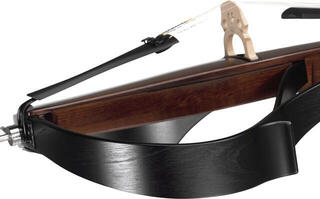
The chest and knee supports must be stable
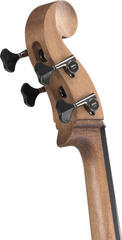
Skeletal models use detachable supports or a compact frame. They must not wobble or press on a single point while you play. Adjust the endpin so that your left-hand position corresponds to that on an acoustic cello. During a longer trial, also consider the weight of the frame because it affects stability and player fatigue.
Distinguish the output from the headphone socket
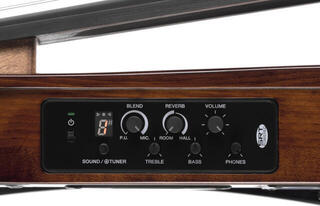
A passive instrument needs a preamp, while an active one needs a battery or charging. A line output may not drive headphones. Before buying, map out the signal path all the way to the amplifier, mixer or headphone amplifier.
The bridge determines bowing technique
Curvature that is too flat makes playing on a single string difficult, while action that is too high tires your left hand. Do not modify an integrated piezo element with a file without professional servicing. You can find further pickup options among pickups for bowed strings.
The stage will put cables and monitoring to the test
Secure the cable so that it does not pull on the connector when you move. Position the monitor away from the direction in which the instrument is most responsive. Before performing, check the battery and ensure the volume remains the same when you switch on effects.
The strings must suit both the pickup and the bridge
Some sets alter the pressure and frequency balance of the piezo system. If you make a substantial change in tension, check the action and bridge angle. You cannot remove mechanical buzzing with equalisation.
Try the scale length and support points while seated, then check whether the electronics work with your headphone or stage equipment.