Albania
 Argentina
 Australia
 Austria
 Belgium
 Bosnia and Herzegovina
 Brazil
 Bulgaria
 Canada
 Chile
 Colombia
 Croatia
 Czech Republic
 Denmark
 Estonia
 Finland
 France
 Germany
 Greece
 Hungary
 Ireland
 Italy
 Latvia
 Lithuania
 Luxembourg
 Mexico
 Moldova
 Montenegro
 Netherlands
 New Zealand
 North Macedonia
 Norway
 Philippines
 Poland
 Portugal
 Romania
 Serbia
 Slovakia
 Slovenia
 South Africa
 Spain
 Sweden
 Switzerland
 Turkey
 Ukraine
 United Kingdom
 United States of America



Column Sound Systems
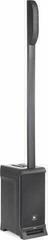
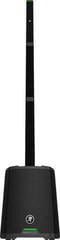
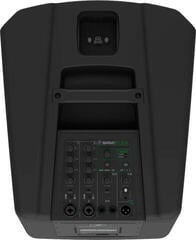
A column PA system combines a vertical speaker module with a bass section and amplification in a setup that takes up little floor space. It suits musicians, presenters, smaller bands and venues that want to set up a clear sound system quickly without separate stands for top loudspeakers. Individual models differ in input count, assembly method, sound dispersion, expansion options and operation. Base your choice on the venue, number of sources and required monitoring, not only on a power specification.
How a column system is arranged
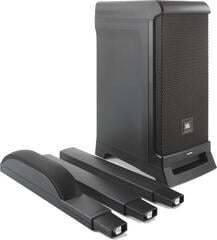
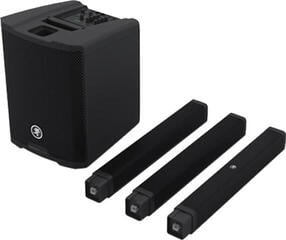
The lower cabinet usually contains the bass driver, amplification and connectors. Above it are one or more spacer sections and a narrow column with smaller drivers. This arrangement places mids and highs higher without a conventional tripod stand. A specific setup may be single-piece, modular or divided into transport sections, so check the connection method and number of covers beforehand.
A column is not automatically a replacement for every PA system. Its coverage depends on construction, room, placement and required volume. An acoustic duo and a speaker need a different input setup and coverage requirements than a band with loud acoustic drums. You can find broader options among PA systems and complete sound systems.
Column system versus conventional loudspeakers
| Consideration | Column system | Conventional loudspeaker setup |
|---|---|---|
| Assembly | Parts are assembled above the bass unit; often without a separate stand | Top loudspeakers are placed on stands or poles |
| Transport | Narrow modules, but the lower cabinet must also be carried | More separate pieces with more flexible load distribution |
| Inputs | Some models have a simple mixer, others expect an external mixer | An active loudspeaker may have basic inputs; a larger setup often uses a mixer |
| Expansion | Options depend on the specific system concept | Individual loudspeakers and subwoofers can be selected more independently |
| Appearance at the venue | Narrow vertical profile and small footprint of the top section | Visible stands and wider cabinets |
Choose according to programme and audience
Speech and presentations
For speakers, intelligibility, easy microphone connection and feedback control are important. Count wired and wireless receivers and check whether the system inputs accept their level. If music from a player alternates with speech, you need convenient independent control of sources. Placement in front of microphones helps reduce feedback, but it should always be tested in the actual venue.
Solo performer, acoustic duo and smaller band
Vocals, guitar and keyboards can use the built-in mixer if it has enough suitable channels and the required controls. With more instruments, an external mixer that sends a finished mix to the system is often more practical. Consider separate monitoring: if the system stands in front of performers, they may not hear the same balance as the audience. Active stage monitors provide monitoring independently of the main PA.
DJ, music playback and venue use
Here, pay attention to stereo connection, bass response, options for linking a pair of systems and source control. One physical system may not create a stereo image even if it accepts two channels; verify its internal processing in the manual. In a restaurant or at a wedding, unobtrusive cable routing, a safe footprint and quick microphone muting also matter.
Built-in mixer and connections
The number of connectors alone does not tell you how many sources you can fully control. Distinguish microphone, instrument and line inputs, stereo pairs and auxiliary playback inputs. For a condenser microphone, check phantom power. If you need more channels, monitor routing or independent effects, look at mixing consoles.
- Microphone input: check the connector, gain range and possible power supply.
- Instrument input: it must be suitably matched for a passive instrument; otherwise use a DI box.
- Line input: used for a mixer, player or another device output at the corresponding level.
- Output to another system: check whether it carries the full mix and whether its level is adjustable or fixed.
- Wireless playback: convenient for background music, but prepare critical programme in a reliably connected format as well.
Room coverage and placement
A narrow column can distribute sound differently from one conventional loudspeaker, but the exact dispersion angle and behaviour are determined by the specific design. Do not place the system in a corner simply to keep it out of the way; nearby walls can change bass response and reflections can reduce intelligibility. Start according to the manufacturer’s recommendation, then refine placement during a test with sound similar to the real programme.
For a long or irregular room, it may be better to divide sound coverage across more points, which requires correct timing and levels. A pair of systems can cover a wider area or create stereo, but it must work as a coordinated setup. Do not aim one column directly at the other, and monitor the feedback threshold with microphones.
Bass section and expansion
The lower module is part of both the sonic and mechanical concept. If the programme needs more low frequencies, check whether the manufacturer permits connection of an additional subwoofer and how the signal is divided. Randomly connecting devices can lead to overlapping frequency bands or unsuitable levels. Compare expansion options with the category of active subwoofers, but assess compatibility according to connectors and documentation.
Transport and setup on site
- Find out the weight and dimensions of each part separately, not only of the complete set.
- Check whether suitable covers are available for the column, spacer modules and bass cabinet.
- On a level surface, connect the parts in the order specified by the manufacturer and do not strain connectors by twisting.
- First connect sources at muted levels, then set the input gain.
- Before leaving, practise disassembly and check that all parts fit into the vehicle.
Modular connectors may carry signal and mechanically hold the setup together. Protect them from dirt, do not place parts on their contacts and do not force a connection if it resists. Route cables away from walkways and keep the lower unit on a stable surface. If the system uses spacer elements of different lengths, mark their order for faster assembly.
Decision checklist
First list the number of microphones, instruments and players that must work at the same time. Add the event type, room shape, monitoring need and the person who will operate the sound. Then compare the built-in mixer, outputs, expansion, dimensions of individual parts and assembly safety. Read the power specification only alongside these characteristics and recommended use.
A column system makes sense when you need a small footprint, few parts and quick setup. Conventional active loudspeakers offer a different degree of separation and placement; you can find them in the category of active loudspeakers. Decide only after checking inputs, monitoring, component dimensions and vehicle space. A single power specification does not answer these practical questions.