 Albania
 Argentina
 Australia
 Austria
 Belgium
 Bosnia and Herzegovina
 Brazil
 Bulgaria
 Canada
 Chile
Chile
 Colombia
 Croatia
 Czech Republic
 Denmark
 Estonia
 Finland
 France
 Germany
 Greece
 Hungary
 Ireland
 Italy
Italy
 Latvia
 Lithuania
 Luxembourg
 Mexico
 Moldova
 Montenegro
 Netherlands
 New Zealand
 North Macedonia
 Norway
 Philippines
 Poland
 Portugal
 Romania
 Serbia
 Slovakia
 Slovenia
 South Africa
 Spain
Spain
 Sweden
 Switzerland
 Turkey
 Ukraine
 United Kingdom
 United States of America



Boosters
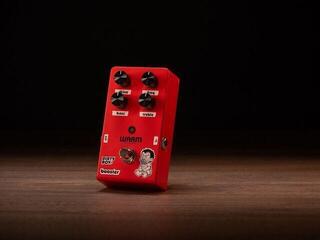
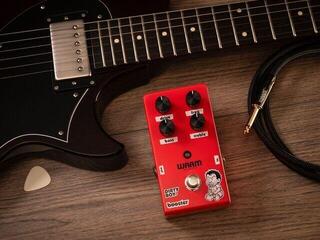
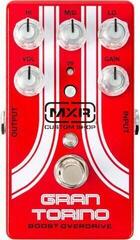
Booster effects raise guitar signal level and may keep the tone nearly unchanged or emphasise selected frequencies. They are used for a louder solo, driving a tube amp input or pushing an overdrive or distortion pedal into more gain. The result depends on chain position and the clean headroom of the next device. Decide whether you mainly need more volume, more distortion or frequency shaping.
Clean boost, treble boost and coloured boost
A clean boost aims to amplify without major EQ change. After gain pedals and into a clean stage it can lift solo volume. Before overdrive or an input near saturation it adds more drive and compression instead.
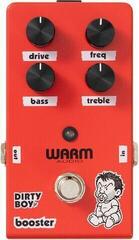
A treble boost often trims bass and stresses upper mids rather than only adding treble. This sharpens attack through a dark amp or with a thick humbucker. A coloured booster or preamp may provide bass, mids and treble controls and mild breakup, making it useful as an always-on tonal base.
Where to place a booster
| Position | Typical result | Use |
|---|---|---|
| Before overdrive or distortion | More gain, compression and changed response | Heavier rhythm or another gain stage |
| After gain pedals | More volume if the next stage stays clean | Solo lift without a major tone change |
| Before the amp input | Clean lift or earlier breakup depending on amp settings | Pushing a clean or mildly driven channel |
| In the effects loop | Level increase after the preamp | Solo lift when the amp input is already saturated |
Not every booster suits every effects loop or signal level. Check both manufacturers' recommendations. Compare at equal perceived volume to separate real tonal change from the impression caused by loudness.
Booster for different situations
Solo in a band
For a simple level lift, placement after distortion is often more predictable. If the preamp is saturated, extra level creates compression rather than volume; the effects loop or lower base gain may work better.
Tighter metal riffs
A booster before a high-gain amp is often set with low gain and high output. Reducing bass before distortion can tighten attack and palm muting. Overdrive can do a similar job but adds its own clipping and stronger colour.
An always-on foundation
A booster can match a lower-output guitar to stronger pickups or add livelier amp response. EQ corrects a dark or thin tone. Check noise, headroom and whether the higher output overloads later devices unintentionally. A booster before a gain pedal normally adds distortion and compression; after it, volume rises only if the next stage has headroom. If the amp input is already saturated, extra level makes the tone denser rather than the solo louder. Raising the level after the preamp can be tested in an effects loop within the permitted signal range.
Controls and technical features
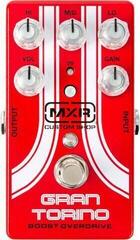
- Level or boost: sets amplification; usable range matters more than the largest number.
- Gain: adds breakup or changes input sensitivity and may be absent on a clean boost.
- EQ: tone or separate bands adjust brightness, bass firmness and mix presence.
- Buffer: can stabilise long cable runs; test its order with sensitive vintage fuzz.
- Supply voltage: some models allow higher voltage for extra clean headroom, only within the manufacturer's range.
- Second footswitch: may control another level, EQ or gain mode.
Booster or another gain pedal?
If you already like your distortion character, a booster can push it without another strong clipping stage. For a separate hard distorted channel, choose distortion. Overdrive sits between these approaches by increasing level while adding compression and colour. For tighter metal riffs, a booster is often set to low internal gain and high output before a high-gain channel. Trimming bass before distortion sharpens attack and palm muting. As an always-on foundation, an EQ-equipped model can match pickups or correct a dark or thin tone; monitor noise and unintended overload in later devices.
Choose one main task and test the pedal in the relevant chain position. A solo booster may disappoint before a saturated input, while an amp-driving model may not remain transparent. Testing at rehearsal volume tells you more than the maximum boost figure. Define one main job before buying. A clean solo lift requires low coloration and sufficient headroom, while amp driving depends on behaviour at high output. Use higher supply voltage only when explicitly supported by the manufacturer. Testing at rehearsal level is more informative than the maximum boost figure alone.