Albania
 Argentina
 Australia
 Austria
 Belgium
 Bosnia and Herzegovina
 Brazil
 Bulgaria
 Canada
 Chile
 Colombia
 Croatia
 Czech Republic
 Denmark
 Estonia
 Finland
 France
 Germany
 Greece
 Hungary
 Ireland
 Italy
 Latvia
 Lithuania
 Luxembourg
 Mexico
 Moldova
 Montenegro
 Netherlands
 New Zealand
 North Macedonia
 Norway
 Philippines
 Poland
 Portugal
 Romania
 Serbia
 Slovakia
 Slovenia
 South Africa
 Spain
 Sweden
 Switzerland
 Turkey
 Ukraine
 United Kingdom
 United States of America


BNC Connectors
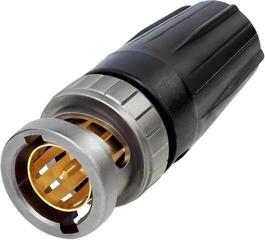
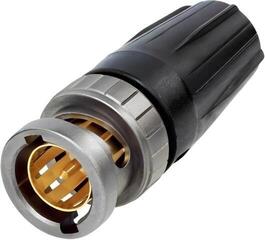
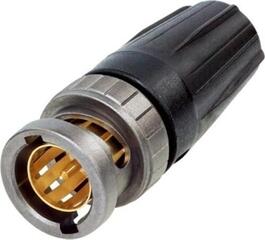
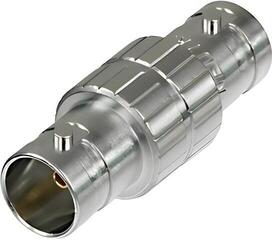
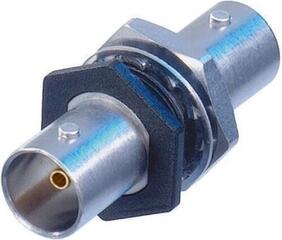
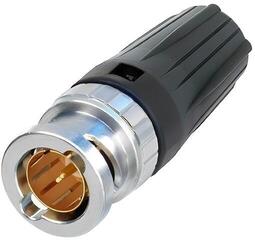
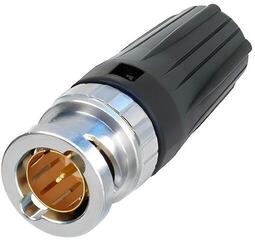
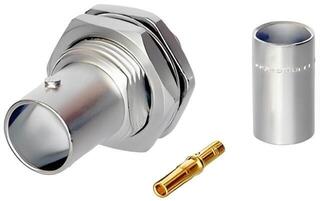
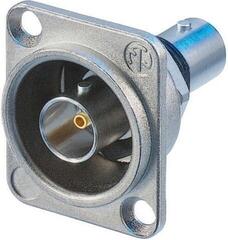
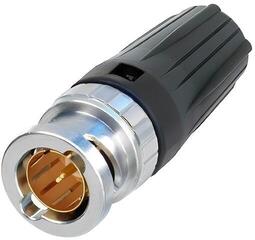
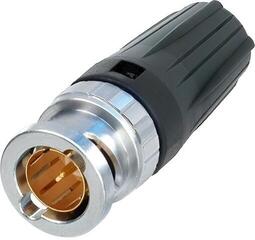
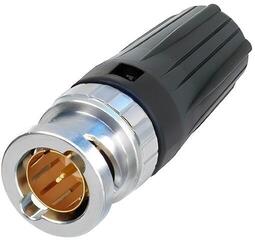
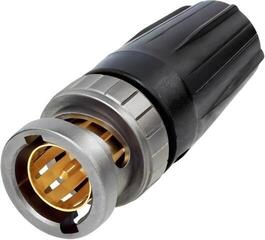
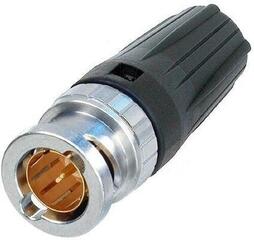
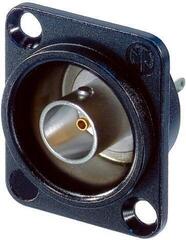
A BNC connector is an individual plug or socket with a bayonet lock, fitted to a coaxial cable or mounted in a panel, rack or device. In audio and video it is used mainly for SDI video, word clock synchronisation and antenna distribution for wireless systems. Ready-made leads are in BNC cables.
75 Ω or 50 Ω
BNC connectors come in two impedance versions. 75 Ω is the standard for video (SDI, HD-SDI, 3G to 12G-SDI) and word clock, while 50 Ω is used for RF and antenna lines, for example with wireless microphones. The two versions usually mate mechanically, but at high frequencies an impedance mismatch causes reflections and signal loss. The connector impedance must therefore match both the cable and the equipment.
| What you are choosing | Typical use | Check before buying |
|---|---|---|
| Cable connector | Cable end for SDI video or word clock | Cable type and diameter, termination method |
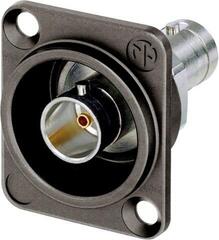
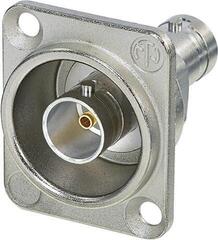
| Panel / feed-through socket | Mounting in a panel, rack or patch panel | Mounting hole size and isolated or grounded version |
| Caps and protective parts | Protection and colour coding of the connector | Size matching the specific connector |
Fitting to a cable
A BNC cable connector is always designed for a specific type of coaxial cable – the outer diameter, centre conductor diameter and shield type all matter. Professional connectors are mostly crimped with a dedicated tool, and the centre contact is crimped or soldered. Before buying, check in the manufacturer's specification which cable the connector is intended for.
Bayonet lock
A BNC connection is made by pushing in and turning a quarter turn. It will not come loose when the cable moves or is pulled by accident, yet it disconnects quickly without tools. That is why it is popular in broadcast, on stage and in studios where connections change often.