 Albania
 Argentina
 Australia
 Austria
 Belgium
 Bosnia and Herzegovina
 Brazil
 Bulgaria
 Canada
 Chile
Chile
 Colombia
 Croatia
 Czech Republic
 Denmark
 Estonia
 Finland
 France
 Germany
 Greece
 Hungary
 Ireland
 Italy
Italy
 Latvia
 Lithuania
 Luxembourg
 Mexico
 Moldova
 Montenegro
 Netherlands
 New Zealand
 North Macedonia
 Norway
 Philippines
 Poland
 Portugal
 Romania
 Serbia
 Slovakia
 Slovenia
 South Africa
 Spain
Spain
 Sweden
 Switzerland
 Turkey
 Ukraine
 United Kingdom
 United States of America



How to learn to play the trumpet
Drawn to the bright, piercing sound of the trumpet and want to learn to play it? You can start at any age. We will tell you where the trumpet comes from, which one to choose, what accessories you need and how to make the first steps, from buzzing into the mouthpiece to your first clean tone.
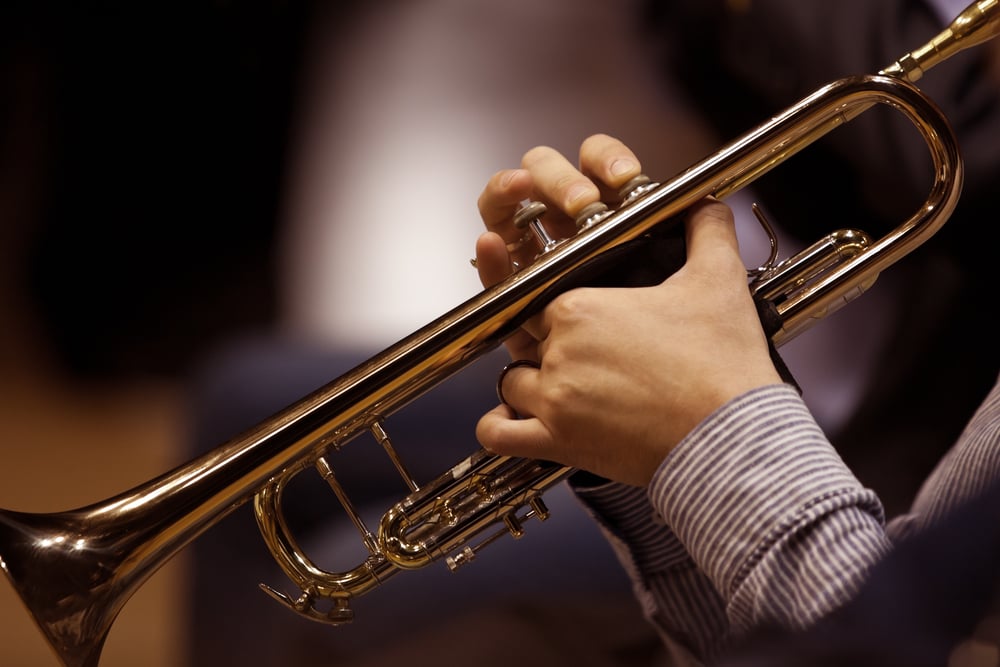
A short history of the trumpet
The trumpet is one of the oldest instruments of all. For centuries it served as a signalling and military instrument, and in Baroque music it shone as the so-called natural trumpet, still entirely without valves. Its famous parts were written even by Johann Sebastian Bach, though playing it required enormous mastery.
The turning point came in the early 19th century, when the instrument got valves. They made it possible to play all the semitones and turned the trumpet into a full melodic instrument. It flourished fully in the 20th century, when it became the queen of jazz thanks to names like Louis Armstrong, Dizzy Gillespie and Miles Davis. Today you hear it in the orchestra, brass band, funk and ska, and its radiant tone cannot be mistaken for any other instrument.
What to consider before buying a trumpet
With your first trumpet you deal with three things: the type of tuning, the quality of the instrument and the accessories. The trumpet belongs among wind instruments, more precisely the brass ones, where the tone is produced by the vibration of your lips in the mouthpiece. For the vast majority of beginners the clear choice is a trumpet tuned in Bb, reach for it unless you have a specific reason for another. Do not overpay at the start, a quality student trumpet will give you a clean tone and last for years.
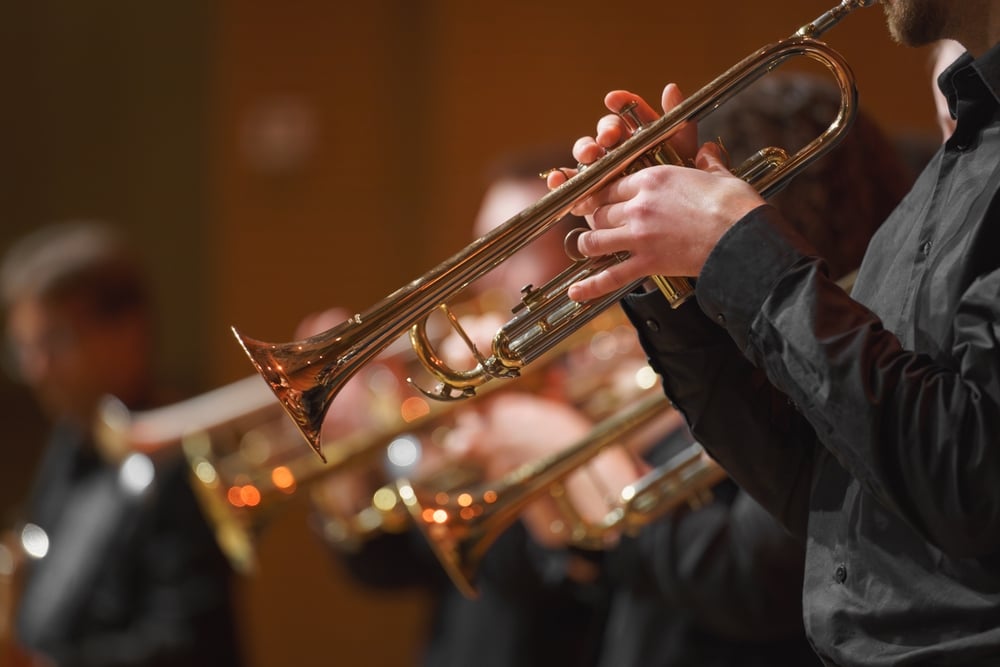
Bb or C trumpet?
The difference is in the tuning and use. The Bb trumpet is the most widespread and has the most method books; it suits jazz, pop, brass band and the band. The C trumpet sounds a touch brighter and is used mainly in symphony orchestras. As a beginner, almost always start on Bb.
| Bb trumpet | C trumpet | |
|---|---|---|
| Tuning | Bb | C |
| Use | jazz, pop, brass band, band | orchestra, classical |
| Method books | the most | fewer |
| For whom | beginners and most players | advanced and orchestral players |
What accessories you need for the trumpet
The instrument alone is not enough, a few things come in handy right away. The mouthpiece is usually included, but valve oil and cleaning are a must from day one, otherwise the valves start to stick.
| Accessory | What it is for |
|---|---|
| Trumpet with mouthpiece | the basics, the mouthpiece is usually included |
| Valve oil | keeps the valves running smoothly and quietly |
| Mute | quiets the instrument and changes the tone colour |
| Case | protects the trumpet when carrying it |
| Cleaning kit | upkeep of the interior so the instrument sounds nice |
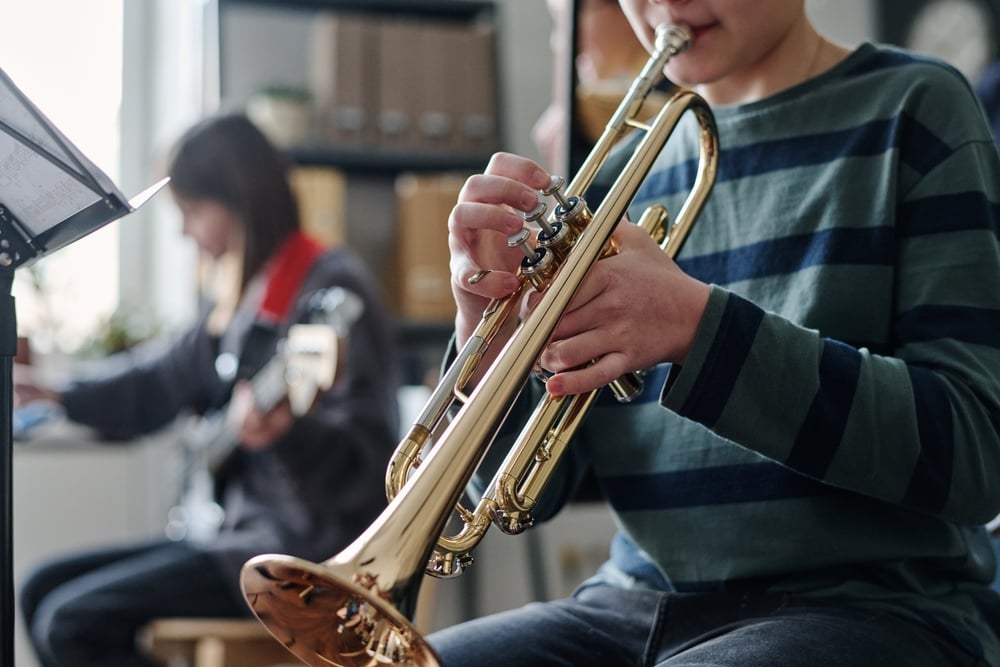
Which trumpet for a beginner
With your first instrument, bet on a proven brand with service. An affordable and reliable start is offered by Latone, whose Bb trumpets have a very good price-to-performance ratio. If you want a more premium classic, reach for the Yamaha brand, whose student models have been a proven standard for years, or for the legendary Vincent Bach brand. What matters is that the valves run smoothly and the instrument holds its tuning.
How to learn to play the trumpet
Start with embouchure and breath, not with songs. On the trumpet the tone is not made by blowing but by the vibration of the lips, so the first thing you learn is the so-called buzzing into the mouthpiece. Once you manage a stable tone, you add the valves and fingering. The first weeks your lips hurt and that is normal, embouchure strength comes gradually. For the right embouchure and breath a teacher helps the most, but you can manage the basics on your own too.
| Step | What to do |
|---|---|
| Embouchure | lips gently together, buzz into the mouthpiece alone without the trumpet |
| Breath | breathe from the diaphragm and push a steady, even airflow |
| First tone | first buzz into the mouthpiece, then fit it onto the trumpet |
| Valves | learn the fingering, start with notes with no valves pressed |
| Routine | rather 15 to 20 minutes daily than an hour once a week |
| Care | oil the valves and after playing empty the condensation from the trumpet |
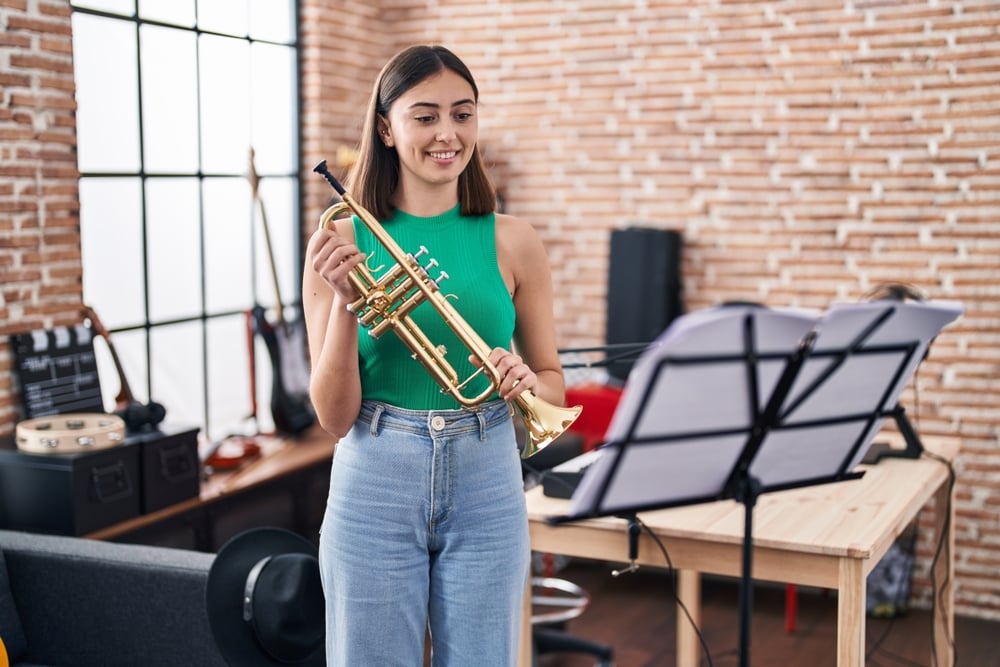
Frequently asked questions about playing the trumpet
Can you start the trumpet as an adult?
Definitely yes, it is never too late to play. Adults learn in a focused way and progress well. The first weeks are about building the embouchure, then it goes faster.
Bb or C trumpet for a beginner?
Almost always a Bb trumpet. It is the most widespread, has the most material and suits the band as well as jazz. The C trumpet is appreciated only by orchestral players.
Can you learn the trumpet on your own?
You will produce the first tone quickly, but a teacher helps a lot with the right embouchure and breath, at least at the start. The basics and regular practice you can manage on your own too.
Why is no tone coming out of my trumpet?
Most often the embouchure or dry valves are to blame. Practise buzzing into the mouthpiece and oil the valves, that usually helps.
Choose your trumpet
The trumpet is an instrument for many years and its radiant tone is worth the initial effort. For a start the Bb trumpet from Latone, Yamaha or Vincent Bach is ideal. Have a look at the whole range and do not forget the valve oil, a mute and a case. For how to choose a trumpet in detail, see the article on how to choose a trumpet, and find more among the wind instruments.