Albania
 Argentina
 Australia
 Austria
 Belgium
 Bosnia and Herzegovina
 Brazil
 Bulgaria
 Canada
 Chile
 Colombia
 Croatia
 Czech Republic
 Denmark
 Estonia
 Finland
 France
 Germany
 Greece
 Hungary
 Ireland
 Italy
 Latvia
 Lithuania
 Luxembourg
 Mexico
 Moldova
 Montenegro
 Netherlands
 New Zealand
 North Macedonia
 Norway
 Philippines
 Poland
 Portugal
 Romania
 Serbia
 Slovakia
 Slovenia
 South Africa
 Spain
 Sweden
 Switzerland
 Turkey
 Ukraine
 United Kingdom
 United States of America



Active Subwoofers
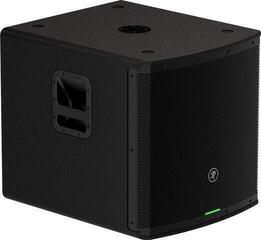
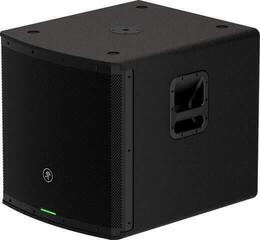
An active subwoofer reproduces low frequencies and has a built-in amplifier, so you do not need to add a separate power amp. It can expand a band's PA, a DJ system, sound for a smaller event or another system with suitable signal connections. Deeper bass does not come simply from buying a larger enclosure, however: integration with the main speakers, the room and crossover settings all matter. Before choosing, check inputs, outputs, controls, weight and transport arrangements.
Connections an active model still needs
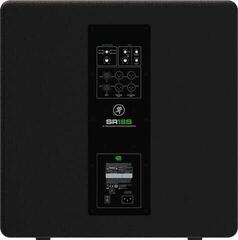
The amplifier, driver and protective processing form a single unit. The manufacturer has therefore matched the electrical components, unlike a separate passive cabinet and amplifier, but you still need mains power and a suitable signal source. A consumer playback device, mixer and microphone do not provide the same signal level. Do not connect a microphone directly unless the subwoofer input is explicitly designed for that signal.
Some models send a full-range signal to the main speakers; others offer an output with the bass filtered out or selectable processing. A connector's label may not explain the entire signal path. Before connecting a pair of top speakers, consult the block diagram or manual.
Comparing sizes and designs
| Choice | Practical advantage | Trade-off |
|---|---|---|
| Smaller enclosure | Easier handling and placement | More limited headroom at the lowest frequencies, depending on design |
| Larger enclosure | May provide greater bass headroom | Greater space and transport requirements |
| One subwoofer | Simpler connection and a concentrated bass source | Uneven coverage may occur in the space |
| Two subwoofers | More placement and coverage options | Require correct timing, polarity and more cabling |
| Compact column system | Components are usually designed to work together | Less freedom to combine components without checking compatibility |
Matching the main speakers
An active subwoofer is often paired with active speakers. Start with the connection diagram recommended for both cabinets. The crossover frequency determines the region where the subwoofer takes over bass reproduction. Setting it too high can reveal the subwoofer's location and muddy the lower midrange; setting it too low can leave a gap between frequency bands.
The polarity or phase control helps align driver movement around the crossover region. Do not automatically turn it to a single “correct” position; listen from the audience area or use measurements. The distance between cabinets and the processing in each affect the result. If the bass is weaker when the speakers play together than separately, check polarity, delay and signal routing.
Placement changes the result
Floor, wall and corner
A subwoofer is usually used on the floor. Being close to a wall or corner can boost some low frequencies, but can also make them less even. Try the available positions before turning up the level control. In a small room, standing waves become apparent: one note may boom while another almost disappears at a different position.
Centre or sides of the stage
A pair of subwoofers under the left and right main speakers looks symmetrical, but interference can occur between the sources. Grouping them closer together often behaves more predictably, but must respect walkways, sightlines and stage construction. Advanced directional arrangements require more cabinets, processing and design by an experienced engineer.
Specifications to read together
- Frequency range: compare it with the stated tolerance and measurement conditions. The lowest figure alone does not describe usable volume.
- Maximum sound pressure level: is meaningful when measured using the same method; amplifier power in watts is not a direct measure of loudness.
- Driver size: relates to the design, but does not determine quality or accuracy without the other specifications.
- Inputs and outputs: check their number, signal level and whether outputs are filtered or pass-through.
- Digital processing: may provide presets, delay and protection. The range of functions varies by model.
- Weight and dimensions: affect loading, storage and whether the cabinet fits under the stage or in the car.
Connection and initial adjustment
- Turn down the mixer output and speaker levels, then connect balanced signal cables according to the manual.
- Feed the signal into the subwoofer or split it according to the system's planned wiring diagram.
- Set the crossover to suit the capabilities of the main speaker.
- Start with a neutral level setting and check polarity from several audience positions.
- Increase the volume of the whole system gradually and watch the limiter indicators.
- Check the settings with familiar music and the actual event programme.
If you add a subwoofer to an existing system, its maximum usable output should match the top speakers. The weaker part of the system determines where distortion or limiting begins. Do not combine two different models without understanding their processing and timing behaviour. The result may be less bass despite having more equipment switched on.
Transport and protection
An active subwoofer may be the heaviest item in the PA system. Check handles, wheel options, edges when loading, and the dimensions of doorways or the luggage compartment. Use another person or a trolley when lifting and moving it. Use a distance pole for the main speaker only in the designated socket and do not exceed the permitted weight of the upper assembly.
A cover protects the finish and control panel during transport, rather than from rain while the unit is operating. Keep amplifier ventilation clear. After moving the unit from cold surroundings into warmth, wait as instructed by the manufacturer until it has acclimatised and condensation is no longer a risk.
Choosing for your needs
A DJ needs to consider musical style, venue size and how many heavy items they can regularly move. A band should balance kick drum and bass guitar requirements with the output of the top speakers and available stage space. A sound engineer will also consider time alignment, directional control and system expansion. Home listening and studio work use differently designed subwoofers; do not choose a stage model simply because it has a built-in amplifier.
If you have not yet decided between built-in amplification and a separate amplifier, explore the parent subwoofer category. An active solution simplifies your system when its inputs, crossover and level suit the other speakers. The overall connections and placement determine the result, rather than any single specification.