 Albania
 Argentina
 Australia
 Austria
 Belgium
 Bosnia and Herzegovina
 Brazil
 Bulgaria
 Canada
 Chile
Chile
 Colombia
 Croatia
 Czech Republic
 Denmark
 Estonia
 Finland
 France
 Germany
 Greece
 Hungary
 Ireland
 Italy
Italy
 Latvia
 Lithuania
 Luxembourg
 Mexico
 Moldova
 Montenegro
 Netherlands
 New Zealand
 North Macedonia
 Norway
 Philippines
 Poland
 Portugal
 Romania
 Serbia
 Slovakia
 Slovenia
 South Africa
 Spain
Spain
 Sweden
 Switzerland
 Turkey
 Ukraine
 United Kingdom
 United States of America



7-string Guitars
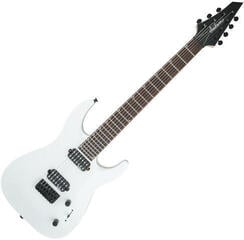
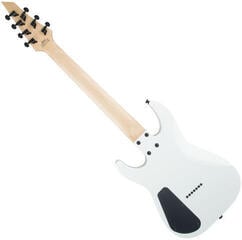
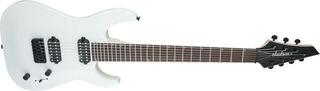
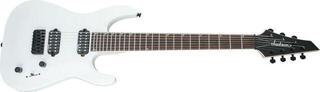
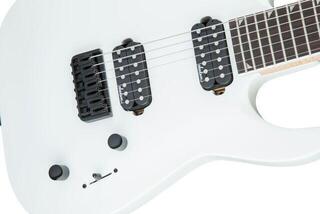
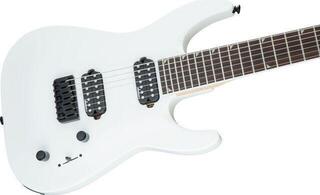
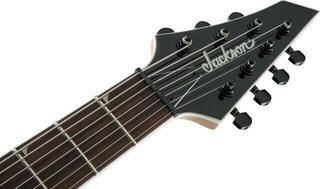
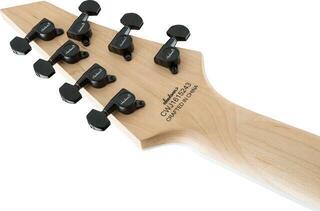
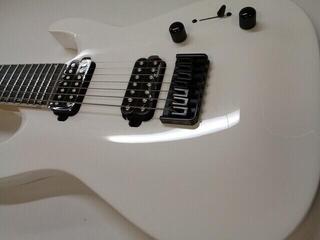
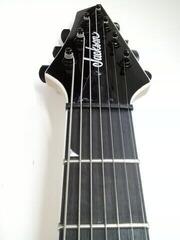
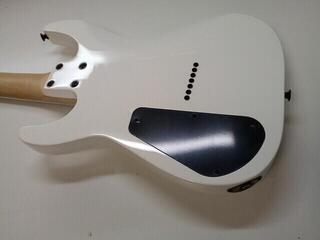
A 7-string guitar extends the familiar six-string range with a lower string, making it useful for heavy riffs, wide chord voicings and melodic playing across a broader register. It is commonly chosen for metal, djent and progressive music, but the added range also works in modern jazz and experimental styles. Sound is only part of the decision: tuning, scale length, string gauge and the feel of the wider neck all matter. The right combination keeps low notes defined without making the instrument unnecessarily tiring to play.
Choose your tuning first
A common starting point is B–E–A–D–G–B–E. It keeps the layout of a standard 6-string guitar and adds a lower register. If you want to tune lower, for example to drop A, pay particular attention to scale length and a suitable string set. Very low tuning on a short scale may require a heavier bottom string and more precise instrument setup.
Scale length, strings and ergonomics
A longer scale increases string tension at the same tuning and gauge. Low notes can feel tighter, while a shorter scale is often more comfortable for bends and wide stretches. Multiscale guitars provide a middle ground: the bass strings have a longer scale and the treble strings a shorter one. Fanned frets change the position of your hand, so check their angle and the location of the neutral fret.
The seventh string makes the fretboard wider and changes the grip. Players with smaller hands may prefer a thinner neck profile, more rounded fretboard edges or narrower string spacing; easy access to the upper frets also helps with technical playing. Width alone is neither a fault nor an advantage. What matters is whether you can mute unused strings securely during riffs while keeping your hand relaxed.
Bridge and pickups for your playing style
A fixed bridge makes retuning, string changes and basic setup easier. A tremolo lets you change pitch with the arm, but frequent tuning changes require more work to balance and set it up. If you use one main tuning and tremolo is part of your technique, it does not have to be a drawback.
Active pickups often provide a strong output and a more even response, which can help with tight, heavily distorted riffs. Passive pickups may respond more sensitively to picking dynamics and the instrument's volume control. The result still depends on pickup design, amplifier and gain settings, so “active” or “passive” should not be treated as shorthand for better tone.
Quick parameter comparison
| Parameter | What it affects | Who it may suit |
|---|---|---|
| Tuning | Range, chord positions and string tension | Standard B for an easier transition from six strings; drop tunings for lower riffs |
| Longer scale | Firmness of the bottom string and fretting-hand reach | Players who use low tunings |
| Multiscale | Different tension across bass and treble strings | Players seeking a tight low end and a softer feel on the treble strings |
| Fixed bridge | Ease of retuning and setup | Frequent tuning changes and straightforward maintenance |
| Tremolo | Pitch control and setup complexity | Tremolo-arm techniques with one stable tuning |
| Neck profile | Grip, reach and hand fatigue | According to hand size and playing technique |
When to consider another category
If one extra string is not enough for your intended tuning, compare 8-string guitars as well. Before buying, write down your main tuning, preferred bridge type and scale length; then consider pickups and the remaining features. You can also find the basic steps for comparing different constructions in the guide How to choose an electric guitar.