 Albania
 Argentina
 Australia
 Austria
 Belgium
 Bosnia and Herzegovina
 Brazil
 Bulgaria
 Canada
 Chile
 Colombia
 Croatia
 Czech Republic
 Denmark
 Estonia
 Finland
 France
 Germany
 Greece
 Hungary
 Ireland
 Italy
 Latvia
 Lithuania
 Luxembourg
 Mexico
 Moldova
 Montenegro
 Netherlands
 New Zealand
 North Macedonia
 Norway
 Philippines
 Poland
 Portugal
 Romania
 Serbia
 Slovakia
 Slovenia
 South Africa
 Spain
 Sweden
 Switzerland
 Turkey
 Ukraine
 United Kingdom
 United States of America


32 GB
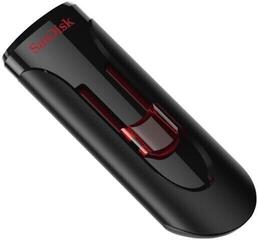
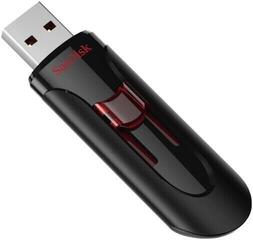
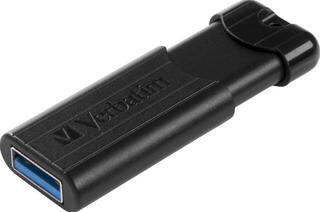
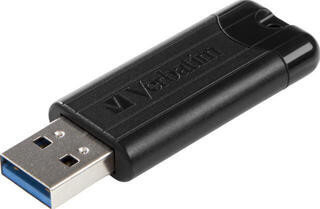
USB Flash Drives with a capacity of 32 GB offer a medium-sized option for moving music, backing tracks for performances, documents and photos between a computer, keyboard instrument or player. This page includes models from SanDisk, Verbatim and Lexar with a standard USB-A connector, some also featuring a USB-C connector at the other end for a phone or tablet. The main difference is the interface: basic drives use USB 2.0, while faster ones use USB 3.0 to USB 3.2. Once connected, your computer shows approximately 29.8 GB because it calculates capacity using a different number system from the manufacturer.
How much music fits on 32 GB?
A 32 GB drive holds roughly 6 000 to 8 000 tracks in MP3 format if each track takes up 4 to 5 MB. Uncompressed WAV audio at CD quality uses about 10 MB per minute, giving you room for around 50 hours of recordings. That leaves a comfortable reserve for keyboard playlists, backing tracks for performances or backups of projects from the rehearsal room.
If you only transfer sheet music in PDF format and a few tracks, a smaller drive from the 16 GB category is enough. For long multitrack recordings or video, choose a capacity of 64 GB.
USB 2.0 or USB 3.0 and newer?
- USB 2.0 is used by models such as the SanDisk Cruzer Blade and Verbatim DataBar. The Cruzer Blade reads at around 20 MB/s, which is enough for music playback and documents.
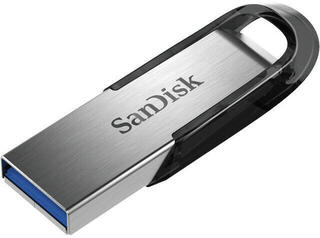
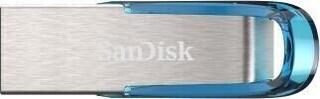
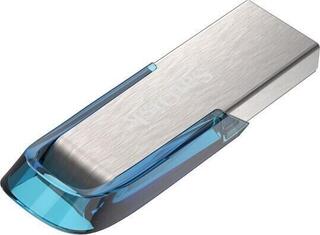
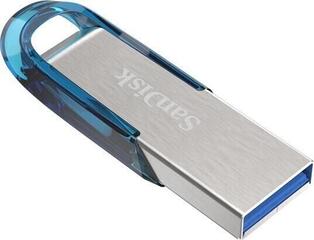
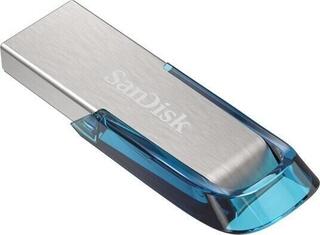
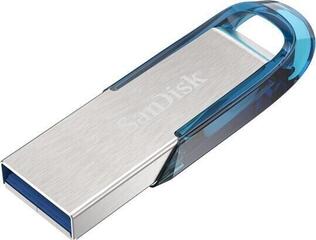
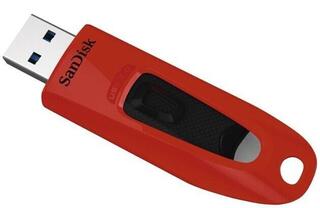
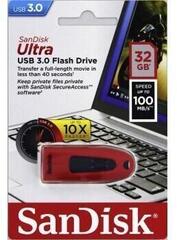
- USB 3.0 to USB 3.2 is used by the SanDisk Ultra, Ultra Flair, Ultra Fit and Ultra Luxe, as well as the Lexar JumpDrive. Manufacturers quote read speeds of 100 to 150 MB/s, depending on the model.
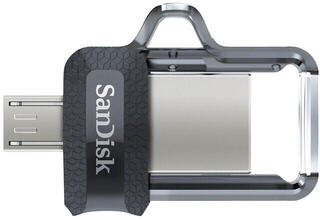
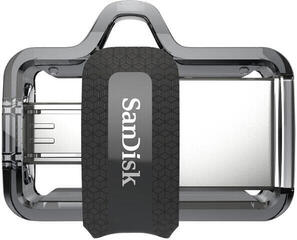
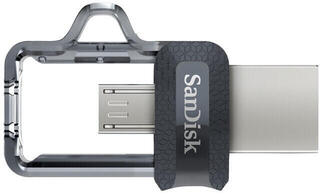
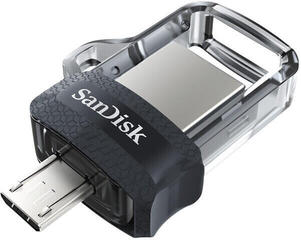
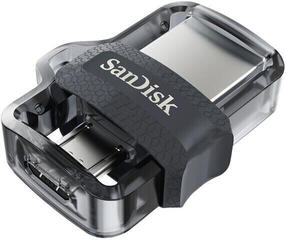
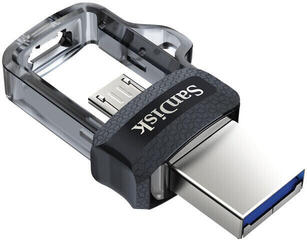
- Two connectors, USB-A and USB-C, are fitted to the SanDisk Ultra Dual GO and Ultra Dual Drive Luxe. They let you transfer files between a computer and phone without a cable.
A fast drive also works in an older USB 2.0 port, just at a lower speed. You get its full speed from a USB 3.0 port or newer.
Will a keyboard, DJ player or car stereo read a 32 GB drive?
Many keyboard instruments, DJ players and car stereos only read drives with the FAT32 file system. Drives up to 32 GB are commonly sold formatted this way, while larger capacities often use exFAT, which older devices do not recognise. FAT32 has one limitation: a single file can be no larger than 4 GB. Songs and backing tracks fit within that limit, but a long video or a large archive does not.
Other capacities and types are in the parent category USB Flash Drives.