Albania
 Argentina
 Australia
 Austria
 Belgium
 Bosnia and Herzegovina
 Brazil
 Bulgaria
 Canada
 Chile
 Colombia
 Croatia
 Czech Republic
 Denmark
 Estonia
 Finland
 France
 Germany
 Greece
 Hungary
 Ireland
 Italy
 Latvia
 Lithuania
 Luxembourg
 Mexico
 Moldova
 Montenegro
 Netherlands
 New Zealand
 North Macedonia
 Norway
 Philippines
 Poland
 Portugal
 Romania
 Serbia
 Slovakia
 Slovenia
 South Africa
 Spain
 Sweden
 Switzerland
 Turkey
 Ukraine
 United Kingdom
 United States of America


Painting brushes
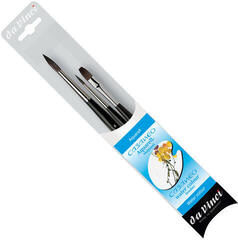
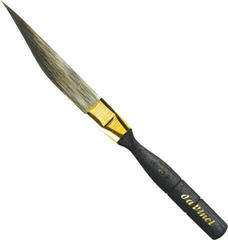
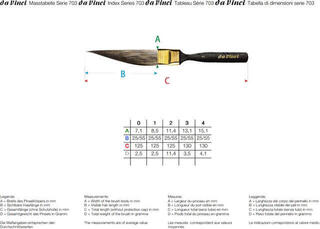
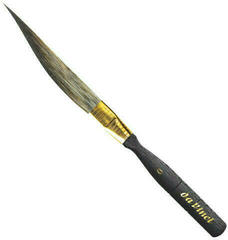
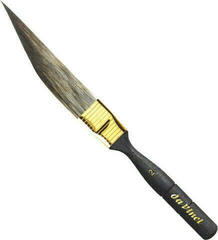
A paintbrush changes the character of paint according to its hair, tip shape, and spring. One universal brush cannot cover a large area, draw a thin line, and create a soft transition equally well. Match your choice to both the medium and the painting format. A secure ferrule and comfortable handle are important during longer sessions.
Tip shape according to the mark
- A flat brush creates areas, sharp edges, and angular strokes.
- A round brush produces lines and small details.
- A filbert combines coverage with a softer rounded edge.
- A fan brush creates delicate textures and softens transitions.
The hair must match the paint
Watercolor requires good water-holding capacity and a fine point. Heavy-body acrylic or oil requires greater spring and durability under pressure. Very soft hair may collapse in thick paint, while hair that is too stiff leaves a pronounced mark where you want a smooth transition.
Size relative to the format
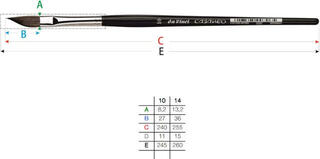
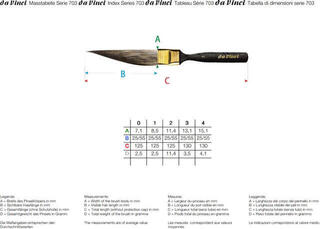
For a large canvas, prepare a wider brush so the area does not have to be built from hundreds of small strokes. Use a detail tool only at the end. You can find more palette knives and palettes under Brushes / Palette Knives / Palettes.
Do not leave paint in the ferrule
After use, remove the remaining paint and clean the brush with a product suitable for the medium. Reshape the hair without twisting and let it dry so water does not run into the ferrule. Do not store the brush standing on its tip.