 Albania
 Argentina
 Australia
 Austria
 Belgium
 Bosnia and Herzegovina
 Brazil
 Bulgaria
 Canada
 Chile
 Colombia
 Croatia
 Czech Republic
 Denmark
 Estonia
 Finland
 France
 Germany
 Greece
 Hungary
 Ireland
 Italy
 Latvia
 Lithuania
 Luxembourg
 Mexico
 Moldova
 Montenegro
 Netherlands
 New Zealand
 North Macedonia
 Norway
 Philippines
 Poland
 Portugal
 Romania
 Serbia
 Slovakia
 Slovenia
 South Africa
 Spain
 Sweden
 Switzerland
 Turkey
 Ukraine
 United Kingdom
 United States of America


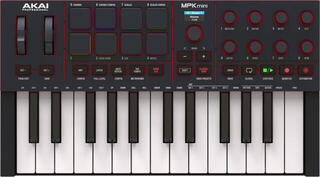
Akai MIDI Keyboard Controllers with up to 25 Keys
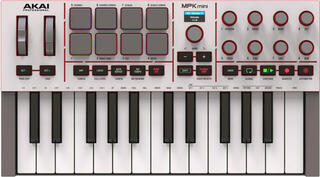
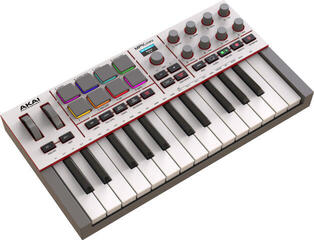
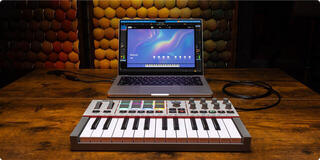
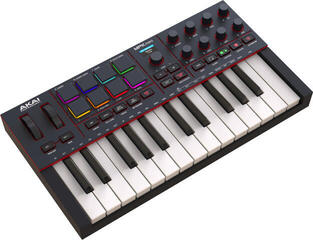
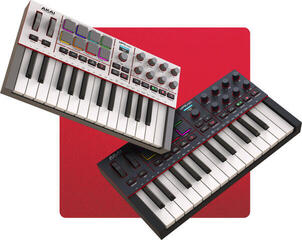
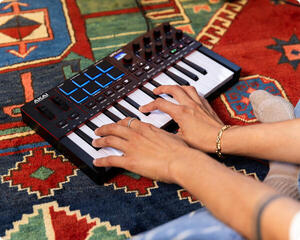
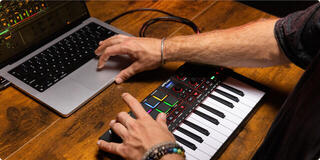
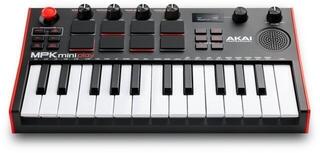
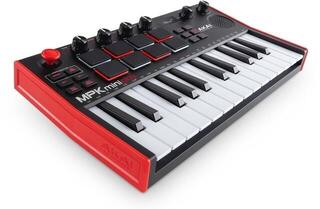
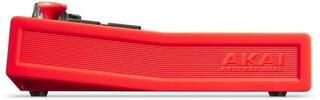
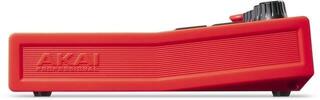
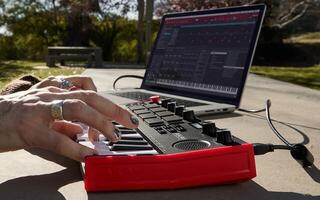
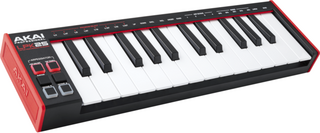
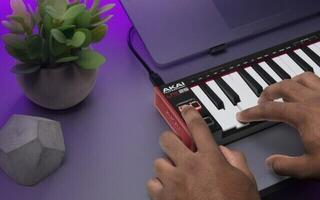
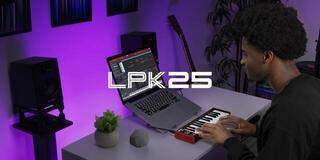
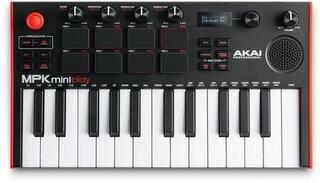
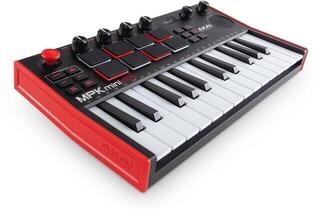
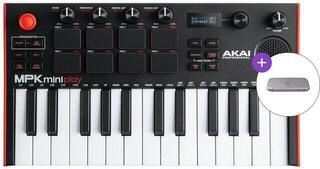
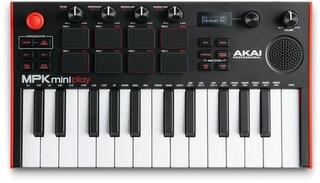
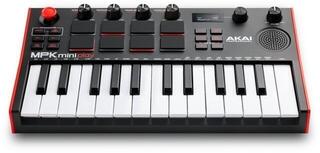
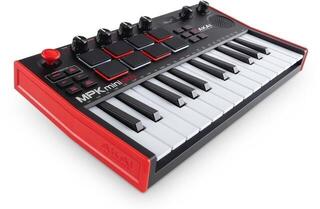
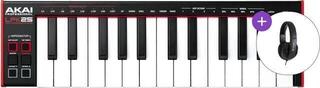
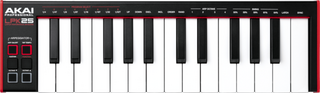
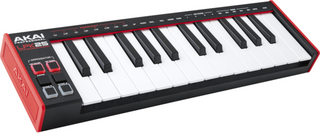
Akai 25-key MIDI keyboard controllers are compact MIDI keyboards for your desk that let you control music software on your computer. Every model on this page has velocity-sensitive mini keys, a USB connection and an arpeggiator. You can choose from the Akai MPK Mini MK4 MIDI Master Keyboards, MPK Mini PLAY MK3 and LPK25 MKII ranges, either on their own or bundled with accessories. They come in handy for making beats, sketching melodies and recording parts one at a time when you have no space for a large keyboard.
MPK Mini, MPK Mini PLAY or LPK25: what's the difference?
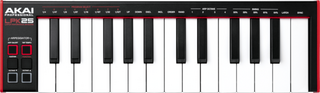
The LPK25 MKII keeps things to the keyboard itself: 25 keys, an arpeggiator and USB, without pads or rotary controls. It's enough if you just want to enter notes into your computer.
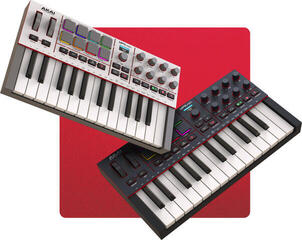
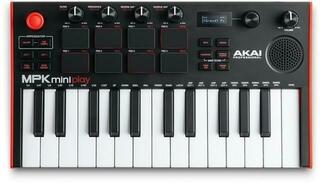
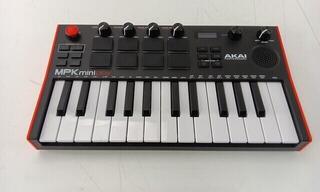
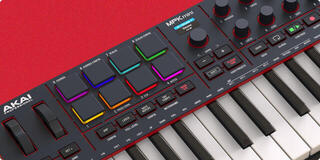
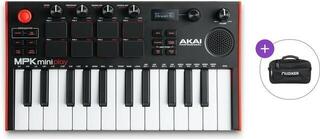
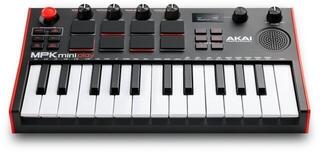
The MPK Mini range adds drum pads and rotary controls alongside the keys. You can record both a melody and drums on one device and use the rotary controls to change sound parameters in your software. The MPK Mini PLAY MK3 also has its own sounds and a built-in speaker, so you can play without a computer, for example while travelling. The MPK Mini MK4 is a newer generation of the MPK Mini range; some packages include an Ableton Live Lite licence, so you can start recording as soon as you unpack it.
Is a MIDI keyboard controller with 25 mini keys enough for you?
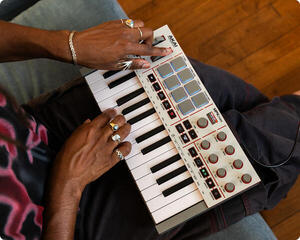
Two octaves cover a bass line, a melodic phrase or a right-hand chord. Octave buttons let you shift the range to play higher and lower notes, just not at the same time. Mini keys are narrower than piano keys: if you're used to playing a piano, you'll need a little time to adjust. For playing with both hands, 25 keys aren't enough; compare the Akai 32-37-Key MIDI Keyboard Controllers category or explore other sizes in Akai MIDI Master Keyboards.
What do velocity sensitivity, an arpeggiator and a MIDI output give you?
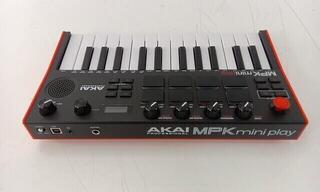
Velocity sensitivity tells your software whether you struck a key gently or firmly, and the software instrument changes the volume or tone accordingly. These models don't have aftertouch, so applying extra pressure to a held key won't send any data. The arpeggiator turns a held chord into a rhythmic sequence of notes, which is useful for repeating patterns in electronic music. Some of the keyboards also have a separate MIDI output that lets you control a synthesizer or sound module without a computer. MIDI only carries information about your playing, rather than sound.